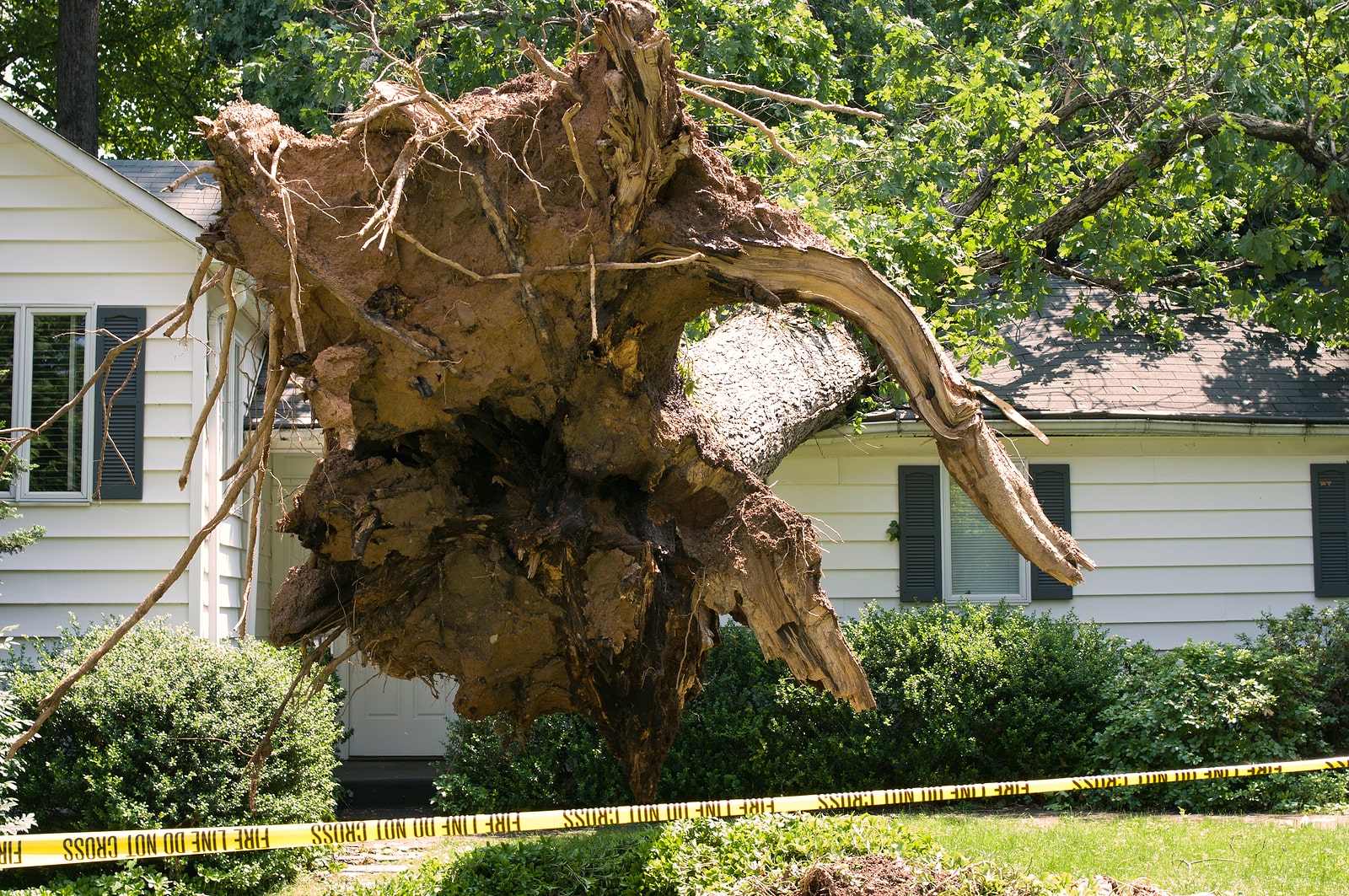
You love the shade and curb appeal your trees provide. Unfortunately, those branches could be quietly destroying your roof. Roof damage from trees is one of the most overlooked threats to residential roofing systems in McKees Rocks and Pittsburgh, PA.
In this guide, Gotcha Covered Contracting will break down how tree overhang roof damage occurs, what falling debris roof wear looks like, and how you can protect your investment before it’s too late.
Need a roof inspection? Call Gotcha Covered Contracting at (724) 581-8147 to schedule your free assessment today.
Falling Debris Traps Moisture and Clogs Drainage Systems
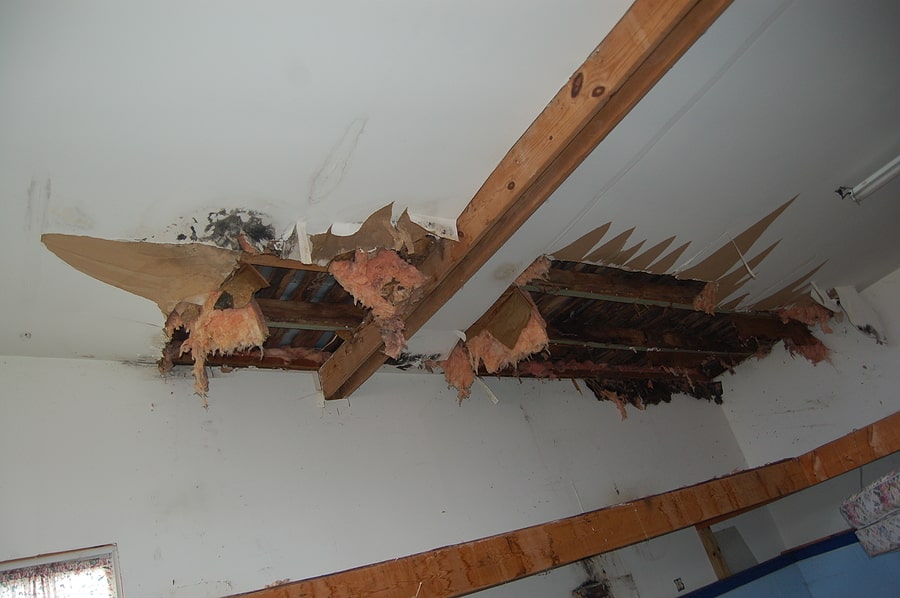
With overhanging trees, leaves, twigs, and seedlings fall onto your roof throughout the year. When this debris piles up in valleys and along edges, it creates dams that block water flow. Roof damage from tree debris escalates quickly when water cannot drain properly.
Trapped water sits against your shingles for extended periods. This puddling leads to moisture infiltration under the roofing material. You may notice leaks in your attic or staining on your ceilings as the damage spreads.
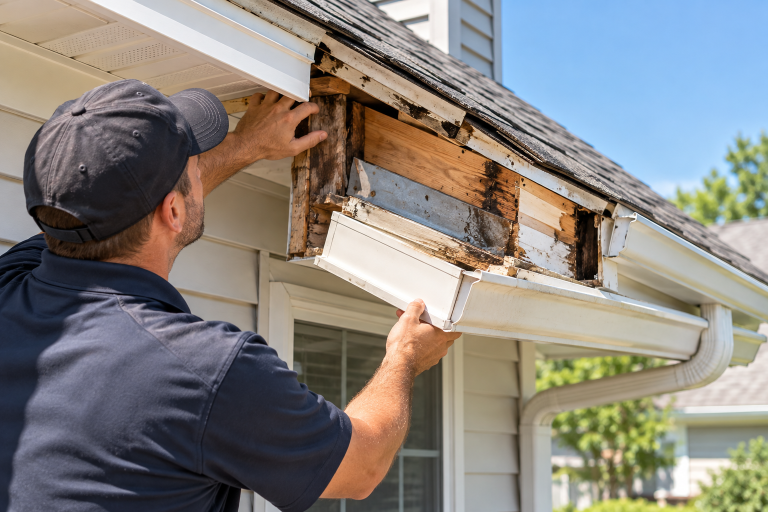
Debris also clogs your gutters and downspouts. When gutters overflow, water spills back onto your roof and cascades down your siding, leading to rot in fascia boards and soffit panels. In Pittsburgh’s tree-heavy neighborhoods like Squirrel Hill and Shadyside, gutter cleaning becomes a constant battle during the fall.
Saturated debris promotes the growth of algae and moss. These organisms hold even more moisture against your roof, accelerating deterioration. The longer debris sits, the worse the damage becomes.
Contact Gotcha Covered Contracting at (724) 581-8147 for professional debris removal and gutter maintenance today.
Overhanging Branches Scrape Away Your Roof’s Protection
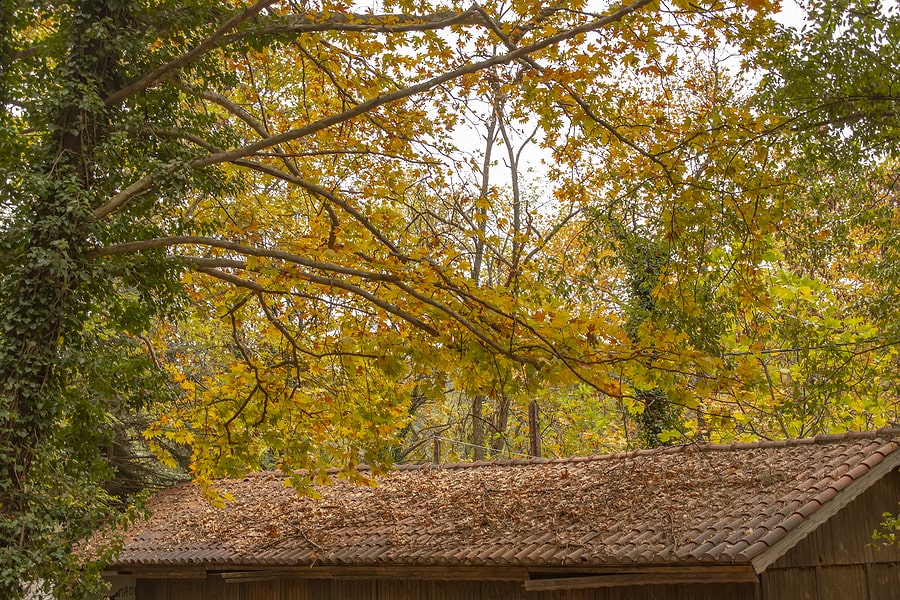
Tree limbs that hang directly over your roof create constant friction against your shingles. Every time the wind blows, those branches rub back and forth across the surface. This scraping wears down the protective granules on your asphalt shingles, which shield your roof from UV rays and weather damage.
Once those granules disappear, your shingles become vulnerable. They crack, curl, and lose their waterproofing ability much faster than they should. This situation is a textbook example of how tree limbs shorten roofs’ lifespans.
Overhanging branches also drip water onto the same spots repeatedly during rainstorms. This concentrated moisture erodes the shingle surface over time. Bird droppings from nearby nests add another layer of damage because they contain acids that eat through roofing materials.
Shade and Humidity Create the Perfect Storm for Roof Decay
Roof damage from trees is a real concern for multiple reasons. Branches that provide shade over your roof might keep your home cooler, but tree overhangs reduce roof lifespans dramatically.
Shaded roofs stay damp longer after rain or morning dew. This prolonged exposure to moisture encourages the growth of algae, moss, and mold.
Algae appears as dark streaks on your shingles. While many homeowners assume these streaks are cosmetic, they actually indicate a serious problem. Algae feeds on the limestone filler in asphalt shingles and breaks it down from the inside out.
Moss growth is even more destructive. Moss roots burrow under shingle edges and lift them away from the roof deck. The lifting creates gaps where water can enter.
In areas with heavy tree cover, such as Mount Lebanon and Fox Chapel, moss can spread across large sections of a roof in a single season. The combination of shade, humidity, and organic debris creates an environment where your roof cannot dry out properly. This constant dampness weakens the entire roofing system and shortens its lifespan by years.
Prevention Strategies To Extend Your Roof’s Life
You can minimize falling debris, roof wear, and other tree-related damage with regular maintenance. Start by trimming branches so they hang at least six feet away from your roof surface. This step prevents direct contact and reduces the amount of debris that lands on your home.
Consider these additional protective measures against roof damage from trees:
- Remove dead or dying trees near your home before they fall
- Install gutter guards to reduce debris buildup
- Schedule annual roof inspections to catch damage early
- Schedule professional roof cleaning when debris accumulates in valleys
- Have roofers apply moss and algae treatments in shaded areas
Trust Gotcha Covered Contracting for Complete Roof Protection
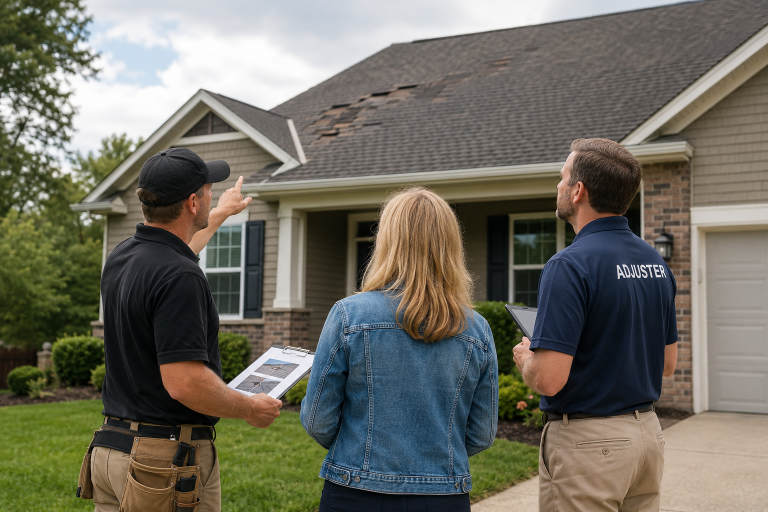
Understanding roof damage from trees helps you take action before your home suffers serious harm. At Gotcha Covered Contracting, we specialize in identifying and repairing damage caused by overhanging trees and accumulated debris. Our team provides comprehensive inspections, emergency repairs, and preventative maintenance to keep your roof in top condition year-round.
Call Gotcha Covered Contracting at (724) 581-8147 to schedule your inspection in McKees Rocks or Pittsburgh, PA, today.