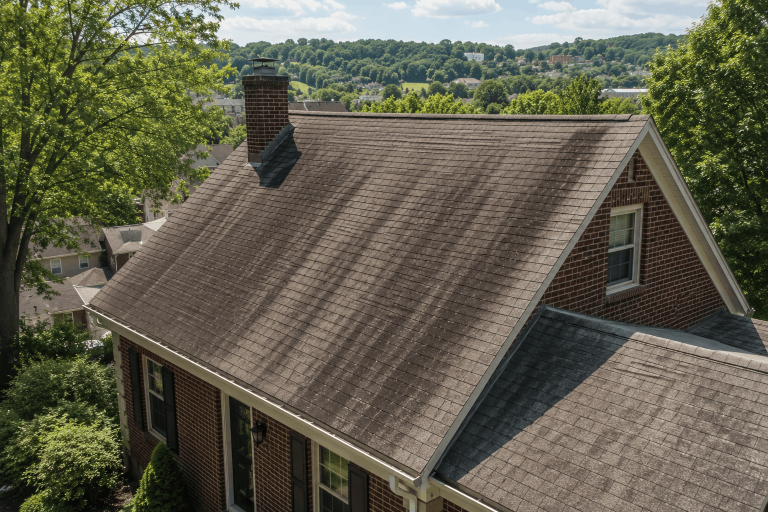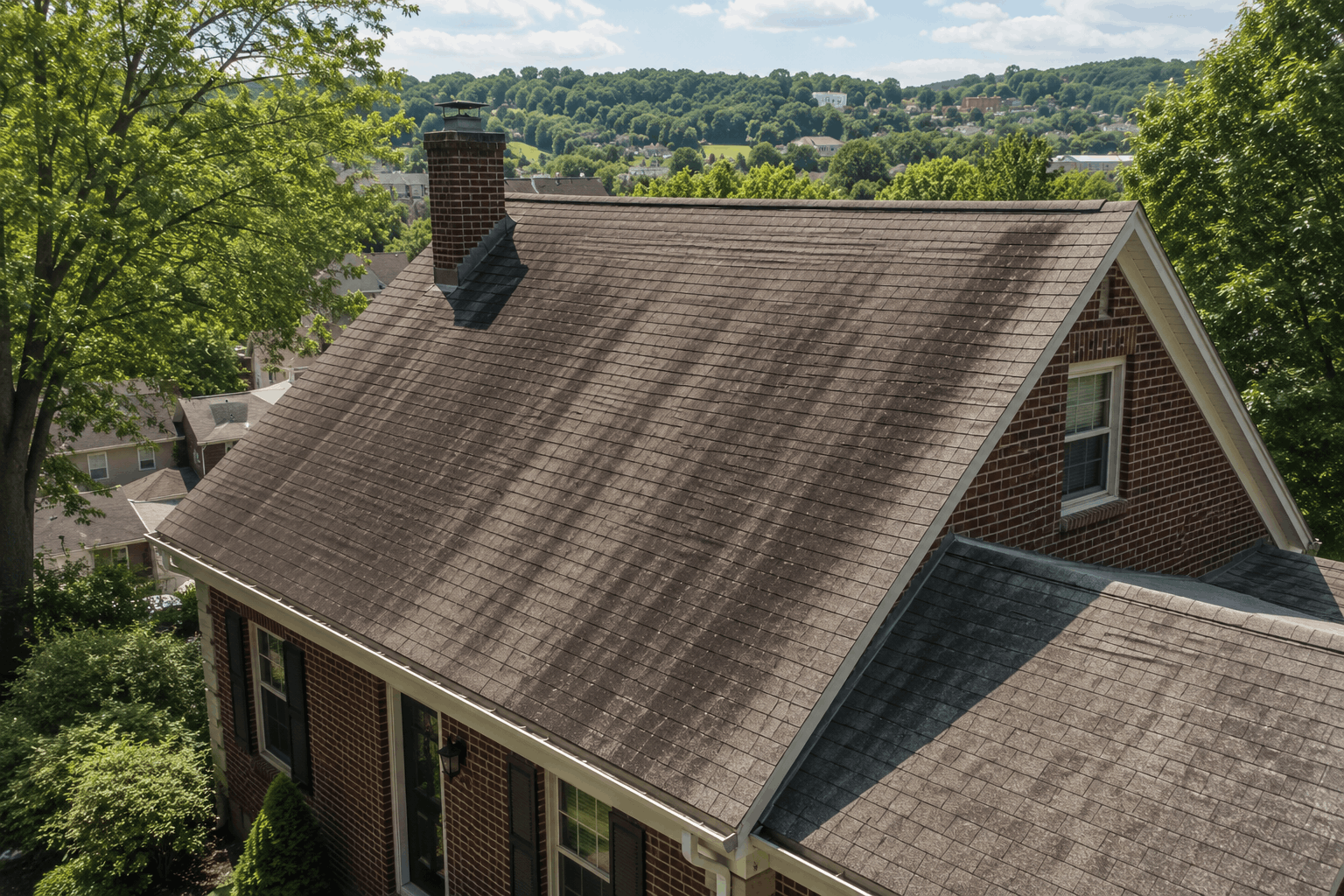
Those dark streaks running down your roof shingles are algae. Specifically, a species called Gloeocapsa magma, a blue-green algae that feeds on the limestone filler in asphalt shingles. It’s mostly cosmetic in the short term, but left for years it shortens shingle life and lowers your home’s curb appeal (and resale value). It’s easy to clean and easy to prevent, but the cleaning method matters more than most homeowners realize.
If you’ve been looking up at your Pittsburgh roof and seeing streaks that weren’t there five years ago, you’re in good company.
Pittsburgh’s combination of humidity, mature tree canopy, and lots of north-facing slopes makes the region a near-ideal habitat for roof algae. It shows up on almost every block in Squirrel Hill, Mt. Lebanon, Sewickley, and the older neighborhoods of the South Hills and North Hills.
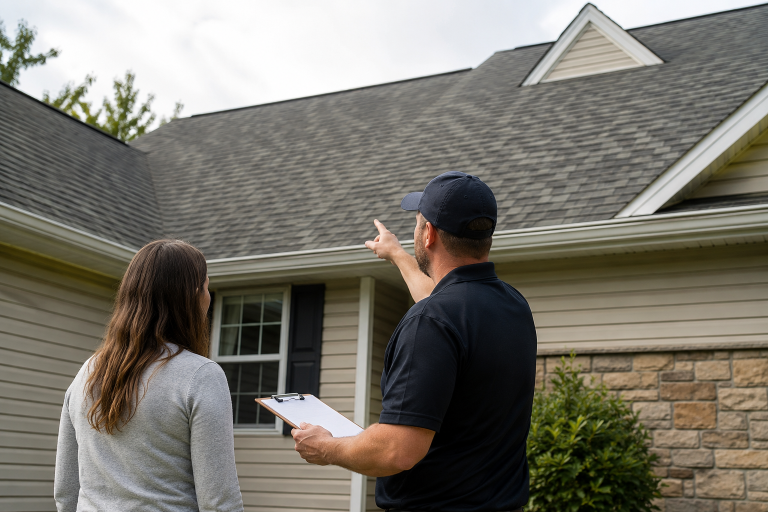
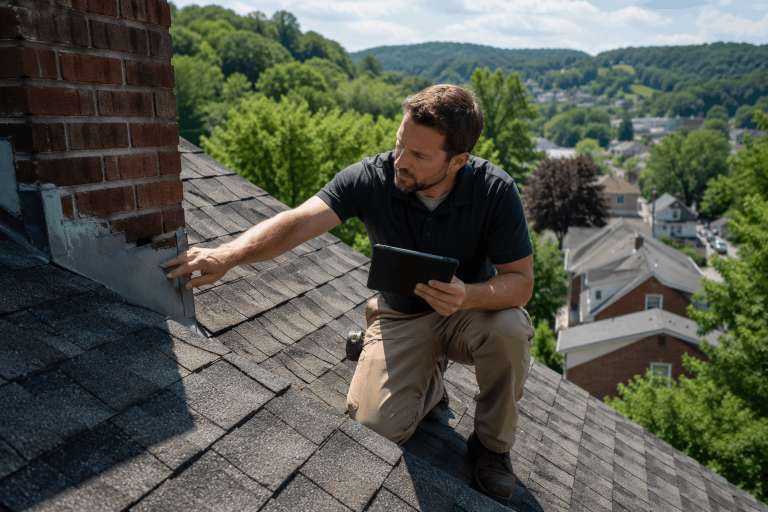
Want a real read on whether your streaks are just cosmetic or something bigger? Call us at (724) 581-8147 or schedule a free inspection online. While we don’t offer roof cleaning services, we’ll evaluate the algae growth, shingle condition, and ventilation, then tell you what (if anything) actually needs to be done.
What Gloeocapsa Magma Actually Is
Gloeocapsa magma is a cyanobacterium (blue-green algae) that spreads through the air on spores. When spores land on an asphalt shingle, they latch onto the limestone filler in the shingle and start feeding. Over time, the algae colony spreads, producing a dark pigment that protects it from UV light. That pigment is what you see as black streaks.
The streaks form on the north side of the roof and in shaded areas first. North-facing slopes stay damp longer after rain because they get less direct sunlight. Damp = algae heaven. Mature trees that shade the roof speed things up significantly.
Pittsburgh’s hilly terrain means most homes have at least one significantly shaded slope, which is why the algae problem is so widespread here.
Why Pittsburgh Roofs Are Especially Prone
Several factors combine to make Pittsburgh roofs algae-prone:
Persistent humidity. Pittsburgh sits in a humid continental climate. Summer humidity stays elevated, and roof surfaces don’t dry out quickly between rain events.
Hilly terrain creates lots of shaded slopes. Unlike flat-lot suburbs, Pittsburgh’s terrain means homes face every cardinal direction, and many lots have steep slopes that keep one side of the roof in shade most of the day.
Mature tree canopy. Squirrel Hill, Highland Park, Sewickley, and many established neighborhoods have heavy tree cover. Trees throw shade, drop debris that holds moisture, and shed organic matter that feeds the algae.
Three Rivers humidity. Homes near the rivers (South Side, North Side, Strip District, Lawrenceville) see slightly higher ambient moisture, which extends the time roofs stay damp.
Asphalt shingle dominance. Algae prefers the limestone filler in asphalt shingles. Slate, metal, and tile roofs are essentially immune.
Most Pittsburgh homes have asphalt shingle roofs, which means most are on the menu for Gloeocapsa magma.
Is It Harmful or Just Ugly?
In the short term (the first few years of streaking), it’s mostly cosmetic. The algae itself isn’t structural; it’s a thin biological layer on top of the shingle.
Long term, though, the algae does cause damage:
- Shingle lifespan. The algae feeds on the limestone in the shingle, which gradually weakens the shingle’s protective surface. Heavy, long-standing algae growth can shave 3 to 5 years off the useful life of an asphalt roof.
- Granule loss. As algae spreads and shingle integrity degrades, granule loss accelerates. Lost granules expose the asphalt mat underneath to UV damage.
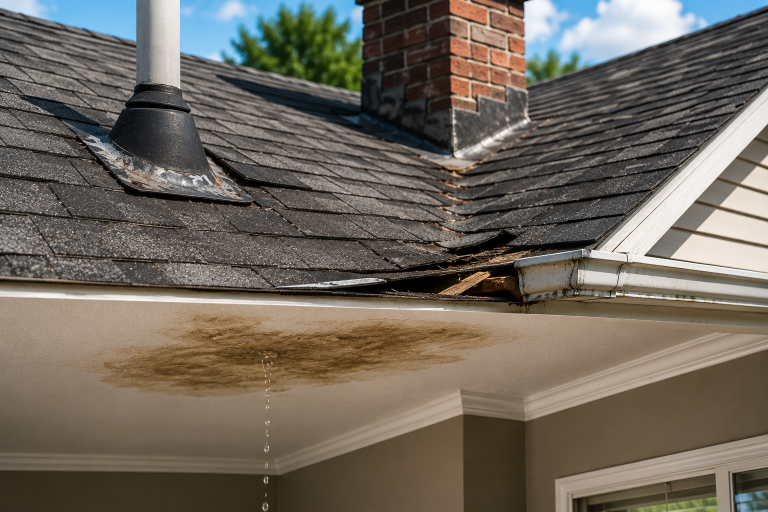
- Moisture retention. The biological layer holds moisture against the shingle, which can extend ice dam formation and freeze-thaw stress.
- Resale value. A roof with heavy algae streaking visibly ages a home and gets flagged in home inspections. Real estate agents in Pittsburgh consistently report black streaks as a negotiating point in offers.
So while a year of light streaking won’t break anything, leaving heavy streaking on the roof for a decade absolutely shortens the roof’s useful life.
How to Remove Black Streaks (And What NOT To Do)
There are three legitimate ways to remove roof algae:
Professional soft wash (recommended). A licensed roof cleaning contractor uses low-pressure sprayers and a sodium hypochlorite-based solution to kill the algae and rinse it off. Done correctly, soft washing kills the algae down to the spore level and leaves the shingle granules intact. Cost in Pittsburgh: $400 to $900 for a typical home.
DIY soft wash (works if you’re careful). Mix equal parts household bleach (sodium hypochlorite) and water in a garden pump sprayer. Apply to the affected shingles. Let dwell for 15 to 20 minutes. Rinse gently with a garden hose. Walking on roofs is dangerous, especially when wet with cleaning solution, so do this from a ladder where possible and protect any landscaping below from bleach runoff.
Replacement with algae-resistant shingles. If your roof is already near end of life, the right move can be skipping the cleaning entirely and replacing with algae-resistant (AR) shingles on the next reroof. AR shingles contain copper granules that prevent algae growth for 10+ years.
For commercial buildings or flat sections where soft wash isn’t ideal, a protective roof coating system can reset the surface and add UV protection in one pass.
Now the DON’T list:
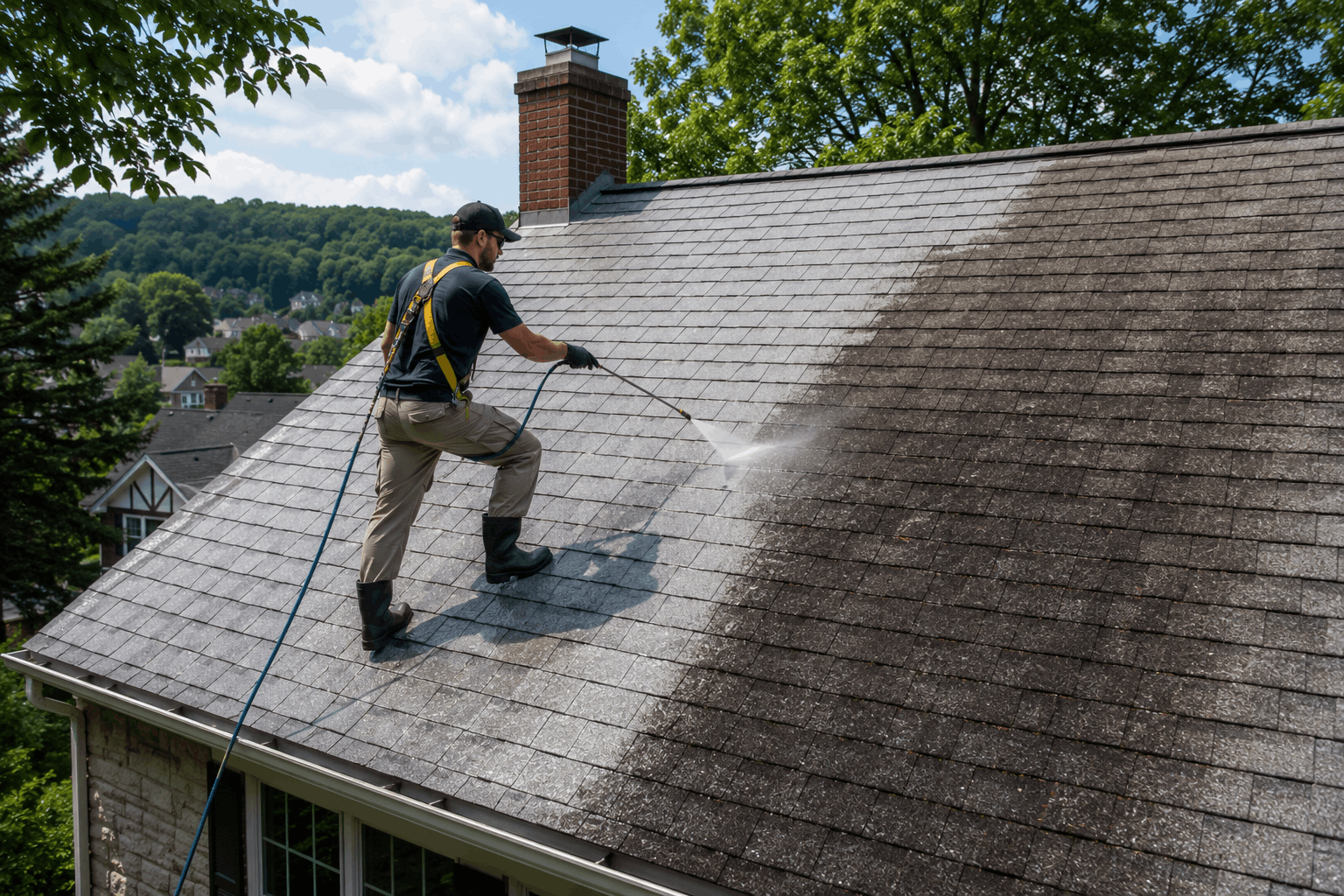
DO NOT power wash. This is the most common Pittsburgh DIY mistake. A pressure washer will absolutely remove the streaks. It will also blast the granules off the shingles, voiding most manufacturer warranties and dramatically shortening roof life. The Asphalt Roofing Manufacturers Association (ARMA) explicitly warns against high-pressure washing of asphalt shingles.
DO NOT use ammonia-based cleaners alongside bleach. The combination produces toxic chloramine gas. Stick with bleach OR ammonia, never both.
DO NOT walk on a wet, freshly-cleaned roof. Bleach-and-water makes shingle surfaces slippery. Falls are the number one cause of DIY roof injuries.
How to Prevent Algae From Coming Back
After cleaning, you have a clean slate. Keeping it that way requires either airflow improvements or hardware solutions:
Copper or zinc strips along the ridge. Install thin metal strips at the roof peak. When it rains, trace amounts of metal wash down the roof and inhibit algae growth. A weekend DIY project on most homes, $100 to $300 in materials. Lasts 15 to 20 years.
Trim overhanging tree branches. Get more sunlight on the roof and reduce debris accumulation in valleys.
Clean gutters and downspouts regularly. Clogged gutters create damp zones where algae thrives at the eaves.
Fix attic ventilation if it’s part of the problem. When streaking shows up on every slope (not just the shaded ones), it often points to trapped attic moisture pushing through the shingles from underneath. The warning signs of poor attic ventilation are worth a quick read if that sounds familiar.
Algae-resistant shingles on next reroof. Most major shingle manufacturers (GAF, CertainTeed, Owens Corning) offer AR shingle lines. They typically cost 5 to 10% more than standard architectural shingles, with a 10-year algae warranty in addition to the shingle warranty.
Cost Breakdown for Pittsburgh Homeowners
| Approach | Cost | Notes |
|---|---|---|
| Professional soft wash | $400 to $900 | Best for most homeowners; results last 3 to 7 years |
| DIY bleach treatment | $30 to $80 in supplies | Works if done safely; results last 1 to 4 years |
| Copper / zinc ridge strips | $100 to $300 in materials | One-time install, 15+ year prevention |
| Algae-resistant shingles (next reroof) | +5% to 10% on reroof cost | 10-year algae warranty on top of shingle warranty |
| Replacement (worst case) | $8,000 to $20,000+ | Only if algae has compounded with other end-of-life signs |
When the Algae Is a Symptom of a Bigger Problem
Sometimes black streaks aren’t just cosmetic. They’re a signal that the roof has other issues:
- Heavy streaking on a 15+ year old roof usually means the shingles are losing granule retention and approaching end of life. Cleaning helps cosmetically but doesn’t extend functional lifespan much.
- Streaking on every slope (not just north-facing) often points to roof ventilation issues. Improper ventilation traps moisture in the attic, which keeps the shingle backside damp and accelerates algae growth from below.
- Streaking accompanied by curling, cupping, or visible granule loss means the roof needs evaluation, not just cleaning.
A free roof inspection helps tell which scenario you’re in.
Here’s what a real professional inspection in Pennsylvania covers so you know what to expect when we show up. We’ve cleaned plenty of perfectly good roofs and we’ve also told homeowners “save the $700, your roof needs replacement anyway” more than once.
What Pittsburgh Homeowners Ask Us Most
Is it mold or algae?
It’s algae, not mold. Roof mold does exist but is much rarer and usually looks fuzzy rather than streaked. Black streaks running vertically down shingles in a relatively flat pattern are Gloeocapsa magma algae.
Does homeowners insurance cover algae cleaning?
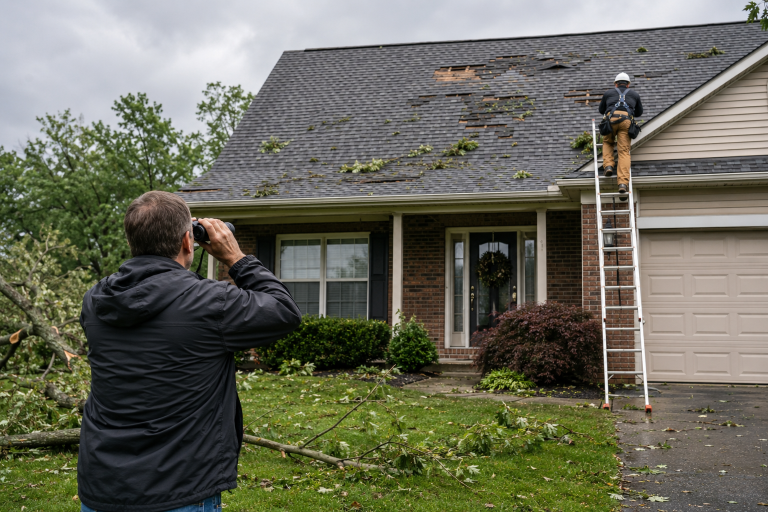
No. Algae growth is a maintenance issue, not a covered event. Insurance does not pay for cleaning. They will pay for replacement only if the algae is one factor in a larger storm-damage claim, not on its own.
Will pressure washing work?
It works in the short term but damages the shingles long term. Every Pittsburgh roofing professional we know advises against it. Soft washing (low pressure, chemical-driven) is the right method.
How often does algae come back?
After a professional cleaning, expect 3 to 7 years before significant regrowth, depending on tree cover and shade. After a DIY cleaning, 1 to 4 years. Copper or zinc strips extend the gap significantly.
Does algae actually affect home value?
Yes.
Pittsburgh real estate agents consistently flag heavily streaked roofs as a price-negotiation point. Roof appearance is one of the most-cited reasons buyers ask for concessions in initial offers.
Can I clean it myself safely?
You can, but the tradeoffs are real. Roof work is dangerous. The bleach solution is hard on landscaping below.
Most homeowners we talk to end up either hiring out the cleaning or replacing with AR shingles on their next reroof.
If you do DIY, work from a ladder when possible, protect plants below, and never use pressure.
Why Pittsburgh Homeowners Hire Gotcha Covered Contracting
Gotcha Covered Contracting has worked Pittsburgh roofs through humid summers and freeze-thaw winters for years. Locally owned Pennsylvania company, GAF and Owens Corning certified, fully licensed and insured, PA HIC registered. We give you the honest call: clean it, fix it, or replace it.
Schedule a Free Roof Inspection
If you’re not sure whether your Pittsburgh roof needs cleaning, repair, or replacement, the first step is a free inspection. Gotcha Covered Contracting does not clean roofs! We will however, evaluate the algae growth, shingle condition, ventilation, and underlying structure, then give you a straight assessment of what makes sense. Call now to speak with a live rep (724) 581-8147.