Feeling cold air around your front door can be frustrating, especially during a Western Pennsylvania winter. You close the door, check the lock, and still notice a chilly draft coming into your home.
Many homeowners assume they need a new exterior door when this happens. Sometimes replacement makes sense, but the problem could be something much simpler.
Worn weatherstripping, gaps around the door frame, poor insulation, or an improperly adjusted threshold can all allow outside air into your home. Some problems only require minor maintenance. Others may point to installation issues that deserve professional attention.
At Gotcha Covered Contracting, we believe homeowners should understand the source of a problem before spending money on a replacement. Proper door installation involves more than hanging a door and making sure it closes. The seals, insulation, and moisture protection around the opening all play an important role.
What Causes Drafts Around Exterior Doors?
An exterior door creates a barrier between your home’s interior and the weather outside. Several components must work together to maintain that barrier.
The door needs to fit correctly within its frame. Weatherstripping must make consistent contact with the door when it closes. The threshold needs to seal the opening along the bottom, while insulation and air sealing protect the space around the jamb.
A problem with any of these components can allow outside air to enter.
Common causes of exterior door drafts include:
-
Worn or damaged weatherstripping
-
Gaps between the door and its frame
-
A loose or improperly adjusted threshold
-
Missing insulation around the door jamb
-
Door alignment problems
-
Cracked or deteriorating seals
Cold air entering near the door does not always mean the door itself has a problem. Air can also move through gaps behind the interior trim.
According to ENERGY STAR, drafts around closed doors and visible gaps near the trim can indicate air leakage. Proper air sealing can help address these problems and improve comfort.
Source: ENERGY STAR, Sealing Behind Window and Door Trim
https://www.energystar.gov/saveathome/seal_insulate/sealing-window-door
The first step is identifying where the air enters. Once you understand the source, you can make a more informed repair or replacement decision.
Why Weatherstripping Matters for Exterior Doors
Weatherstripping helps create a seal between your exterior door and its frame. It limits unwanted airflow and helps protect the opening from weather exposure.
Most residential entry doors have flexible weatherstripping around the top and sides of the frame. When you close the door, the material compresses against the door’s edge.
That contact helps reduce drafts.
Over time, everyday use can wear down the weatherstripping. Frequent opening and closing, seasonal temperature changes, and exposure to sunlight can affect its condition.
The material may become flattened, cracked, brittle, or loose. In some cases, the weatherstripping still looks acceptable but no longer makes consistent contact with the door.
How Can You Tell When Weatherstripping Needs Replacement?
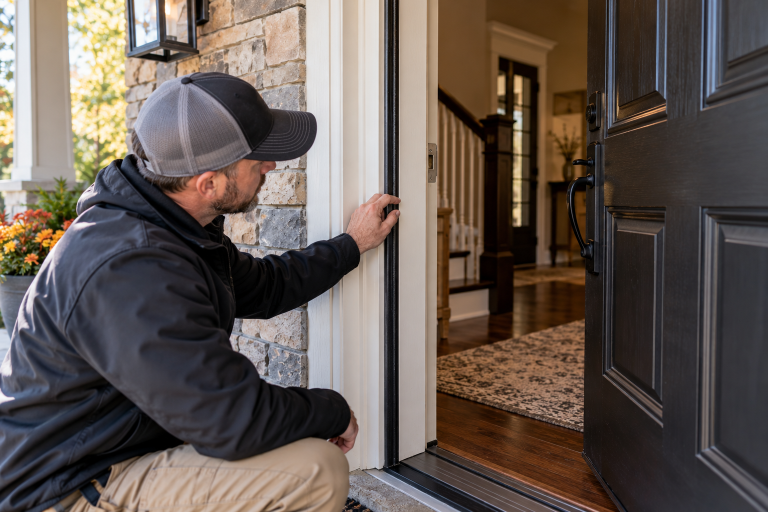
Start by examining the edges of your closed door.
Look for visible gaps, damaged seals, or sections where the weatherstripping has pulled away from the frame. You may also notice daylight around an area that should remain sealed.
On a cold or windy day, slowly move your hand along the door’s perimeter. Notice whether you feel moving air around specific areas.
Pay attention to how the door closes. If you must pull or push unusually hard to engage the latch, the door may have an alignment problem.
Weatherstripping does not need replacement according to one universal schedule. Some materials last longer than others. Regular inspections can help you identify deterioration before it affects your home’s comfort.
Replacing worn weatherstripping may solve a draft problem without requiring a new exterior door.
The Door Threshold Can Also Cause Drafts
Homeowners often notice cold air near the floor without realizing the threshold may be responsible.
The threshold sits at the bottom of an exterior doorway. A door sweep or bottom seal works with the threshold to reduce airflow beneath the closed door.
When these components lose contact, outside air can enter.
The bottom seal may wear out through normal use. A threshold can also shift or become improperly adjusted. Sometimes the door itself begins to sag, which changes how the bottom seal meets the threshold.
A towel placed against the door might temporarily reduce the draft, but it will not correct the underlying issue.
A professional can evaluate the condition of the bottom seal, threshold, and door alignment to determine the appropriate solution.
Some doors only need a new sweep or adjustment. Others may require more involved repairs.
The goal is to create an effective seal without interfering with the door’s operation, locking hardware, or intended drainage.
Why Insulation Around the Door Jamb Is Important
The weatherstripping may work correctly while the door still allows cold air inside. In that situation, the problem could involve the space surrounding the door jamb.
The jamb forms the frame that supports the door. During installation, contractors typically leave a small gap between the door frame and the surrounding wall opening.
That space allows the installer to position and level the door properly.
However, the installer must also address insulation and air sealing around that gap.
Without proper sealing, outdoor air can move through the opening and reach the interior of the home.
Interior trim often covers these spaces, making the problem difficult to recognize.
How Should Contractors Seal Around a Door Jamb?
The correct approach depends on the door manufacturer’s instructions, opening conditions, and surrounding construction.
Some installations use low-expansion foam products specifically designed for doors and windows. Other suitable materials may include backer rod, approved sealants, and insulation.
The installer must choose materials that fit the application.
Using too much expanding foam can place pressure on the frame. That pressure may affect how the door opens, closes, or latches.
Insulation and air sealing also serve different purposes. Insulation helps slow heat transfer, while air sealing reduces uncontrolled airflow.
ENERGY STAR explains that sealing air leaks and adding appropriate insulation can improve home comfort and energy efficiency.
Source: ENERGY STAR, Seal and Insulate
https://www.energystar.gov/saveathome/seal_insulate
Proper exterior door installation should address both concerns rather than relying on the door itself to do all the work.
Proper Door Installation Also Helps Protect Against Moisture
Cold air is not the only concern around an exterior door. Rain and moisture can also find their way through poorly protected openings.
Western Pennsylvania homes experience changing temperatures, heavy rain, snow, and wind-driven precipitation. These conditions make proper exterior sealing especially important.
During installation, contractors need to consider how water moves around the doorway.
Flashing tape, sill flashing, sealants, and water-resistant building materials can help direct moisture away from vulnerable areas.
The installer must also integrate these components with the home’s existing weather-resistant barrier.
What Happens When Water Gets Around a Door Frame?
Moisture can affect the jamb, sill, surrounding trim, or nearby framing if the opening does not manage water correctly.
Homeowners may notice peeling paint, swelling, discoloration, or soft wood around the lower corners of the doorway.
These signs do not automatically mean the entire door needs replacement. However, they may indicate a moisture problem that deserves investigation.
Building Science Corporation explains how properly installed pan flashing helps manage water around exterior wall openings.
Source: Building Science Corporation, Pan Flashing for Exterior Wall Openings
https://buildingscience.com/documents/information-sheets/pan-flashing-for-exterior-wall-openings
Simply applying more caulk around a doorway may not solve the problem. Some door systems include drainage paths that must remain open.
A professional should evaluate the complete opening before deciding where additional sealing belongs.
Why a New Exterior Door Can Still Feel Drafty
A new door does not automatically guarantee a draft-free installation.
Even a quality exterior door may allow unwanted airflow if the installer overlooks the surrounding details.
For example, a new door might close tightly along the top but leave a small gap near one lower corner. That problem may involve the alignment of the frame.
Another door might seal properly against its weatherstripping while air continues to enter behind the interior trim.
The installer needs to identify these conditions and address them appropriately.
At Gotcha Covered Contracting, we believe homeowners should understand the installation process before selecting a replacement door.
Our exterior door replacement services focus on helping homeowners choose appropriate products while considering the condition of the surrounding opening.
Exterior Door Replacement Services:
https://www.gccroofers.com/pennsylvania/door-replacement/
Door appearance, materials, hardware, and energy performance all matter. However, proper installation remains an essential part of the finished project.
Should You Repair or Replace a Drafty Exterior Door?
A drafty door does not always need replacement.
If the door remains structurally sound and closes correctly, a targeted repair may address the problem.
Replacing weatherstripping, adjusting a threshold, or correcting a small alignment issue could improve comfort without replacing the entire assembly.
However, replacement may make more sense when the door has significant damage or can no longer function properly.
When Is a Door Repair Worth Considering?
Repair may be practical when the problem involves one specific component and the surrounding door assembly remains in good condition.
For example, you might notice that the weatherstripping has become brittle while the jamb and door remain sound.
A replacement seal could correct the problem.
Similarly, a damaged door sweep may require attention without making an entire replacement necessary.
When Might Door Replacement Be the Better Option?
Replacement may deserve consideration when you notice significant warping, extensive frame deterioration, repeated moisture problems, or difficulty maintaining a proper seal.
Previous installation problems can also complicate repair decisions.
An inspection can help determine whether correcting the existing installation makes sense or whether replacing the assembly offers a more practical solution.
The same general principle applies to windows. A draft may originate from the product, its weather seals, or the surrounding opening.
Gotcha Covered Contracting also offers residential window replacement services for homeowners experiencing these concerns.
Residential Window Replacement Services:
https://www.gccroofers.com/pennsylvania/window-replacement-pittsburgh/
Understanding the condition of the opening is more useful than automatically assuming every draft requires a complete replacement.
How Exterior Siding Affects Door Protection
An exterior door works as part of the home’s larger wall system.
The surrounding construction includes framing, exterior sheathing, insulation, siding, flashing, and interior finishes.
If contractors overlook these connections during installation, water or air may find a path into the opening.
This becomes especially important when replacing siding near an existing doorway.
Removing exterior materials may reveal damage that was previously hidden behind the finished surface.
For example, recurring staining near the upper corner of a door could indicate water entering through a nearby exterior joint.
The source may not be obvious from the interior.
A professional inspection can help identify whether the problem involves the door, surrounding trim, flashing, or another part of the exterior wall.
Gotcha Covered Contracting provides wood siding repair and replacement services as part of its residential exterior work.
Wood Siding Services:
https://www.gccroofers.com/pennsylvania/siding/wood-siding-pittsburgh/
Looking at the complete exterior system can help homeowners make better decisions about repairs and replacements.
Exterior Door Maintenance Tips for Western Pennsylvania Homes
Regular maintenance can help you recognize smaller problems before they become more disruptive.
You do not need to disassemble the doorway to perform a basic visual check.
Start by examining the weatherstripping around your frequently used exterior doors. Look for cracking, flattening, or loose sections.
Next, check the bottom seal and threshold. Make sure the door closes smoothly and the latch operates normally.
After heavy rain, inspect the lower corners of the doorway for unusual moisture or staining.
Pay attention to recurring drafts and changes in the way the door operates. A door that suddenly becomes difficult to latch may need adjustment.
Avoid sealing unfamiliar gaps without first understanding their purpose. Some areas help manage drainage and should remain open.
Homeowners around Robinson Township, Pittsburgh, and surrounding Western Pennsylvania communities experience seasonal weather changes that can expose weaknesses in exterior openings.
Gotcha Covered Contracting primarily serves homeowners within roughly a 60-mile radius of Robinson Township, with select reach into Ohio and West Virginia.
Routine maintenance helps homeowners recognize when a simple repair may be enough and when professional attention makes sense.
What Should You Ask Before Installing a New Exterior Door?
A new exterior door represents a meaningful home improvement investment.
Before moving forward, ask your contractor how the installation will address the complete opening.
Will the contractor inspect the existing jamb and surrounding framing? How will the installer insulate and seal the gap around the new door? What materials will help manage moisture near the sill and exterior trim?
You should also ask whether the existing threshold needs replacement and how the new door will integrate with the surrounding siding.
A contractor should explain these details in straightforward language.
The right installation approach depends on your home’s construction, the door manufacturer’s instructions, and any damage the contractor discovers.
Understanding those factors can help you compare recommendations and make an informed decision.
Frequently Asked Questions
Why do I feel cold air around my front door when it is closed?
Worn weatherstripping, gaps around the frame, poor door alignment, or an improperly sealed threshold can cause drafts. Air may also enter through gaps between the door jamb and the surrounding wall.
How often should I replace exterior door weatherstripping?
Inspect weatherstripping regularly and replace it when you notice damage, flattening, or gaps. Its lifespan depends on the material, exposure, and frequency of use.
Can poor door insulation increase heating costs?
Yes. Unsealed gaps around exterior doors can allow indoor air to escape and outside air to enter. These leaks may increase heating demand, although the impact depends on the home’s overall condition.
Can I replace weatherstripping without replacing the door?
Often, yes. If the door and frame remain in good condition, replacing worn weatherstripping may improve the seal without requiring a complete door replacement.
What causes moisture around the bottom of an exterior door?
Moisture may enter through deteriorating seals, improper flashing, threshold problems, or gaps around the surrounding construction. An inspection can help identify the actual source.
Can a new exterior door still have air leaks?
Yes. Installation gaps, poor alignment, inadequate air sealing, or damaged weatherstripping can allow drafts even when the door itself is new.
How do I know whether my exterior door needs replacement?
Look for extensive frame deterioration, significant warping, recurring moisture problems, or difficulty maintaining a proper seal. A professional assessment can help determine whether repair or replacement makes sense.
Get Clear Answers About Your Exterior Doors
A draft around your front door does not always mean you need a new one. Worn weatherstripping, an improperly adjusted threshold, or an installation gap could be responsible.
The right solution starts with understanding what is actually happening.
Gotcha Covered Contracting helps homeowners throughout Robinson Township and Western Pennsylvania make informed decisions about their exterior doors.
If you notice drafts, moisture concerns, or problems with an existing door, schedule a consultation with Gotcha Covered Contracting for straightforward guidance.
Contact Gotcha Covered Contracting: