A damaged gutter, bent piece of metal, loose siding panel, or water-stained section of a home can look fairly straightforward from the outside. A homeowner sees the visible problem, a contractor inspects it, and everyone naturally wants to know what the repair will involve.
The challenge is that exterior systems are built in layers. The material you can see is often attached to wood, sheathing, flashing, a water-resistive barrier, insulation, framing, or other components that are hidden until the damaged material is removed.
That means an inspection can identify the visible condition and help establish a reasonable repair plan, but it cannot always reveal every condition underneath a closed assembly.
This does not mean homeowners should expect every repair to become a larger project. It means a responsible contractor needs to evaluate what is uncovered and determine whether the underlying area is suitable for the new material to be installed correctly.
For homeowners near Robinson Township and throughout Western Pennsylvania, understanding this part of the repair process can make an unexpected discovery much easier to navigate.
Why Some Damage Cannot Be Seen During the Initial Inspection
A professional inspection can reveal a great deal about a home without removing materials. Contractors may be able to identify loose components, impact damage, deteriorated surfaces, drainage problems, water staining, movement, gaps, or other visible concerns.
There are limits, however, to what can be confirmed while the home remains closed up.
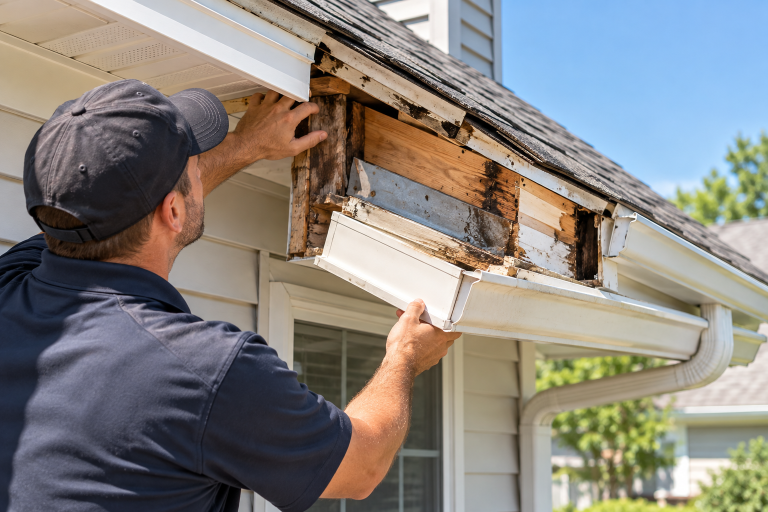
Think about a gutter attached along the edge of a home. From the ground or during a closer inspection, a contractor may be able to see that the gutter or surrounding metal has been bent, pulled loose, or damaged. What may not be visible is the condition of the wood or fastening surface behind it.
The same principle can apply to siding. A damaged panel may be obvious, while the sheathing, water-resistive barrier, flashing, or framing behind the siding remains concealed.
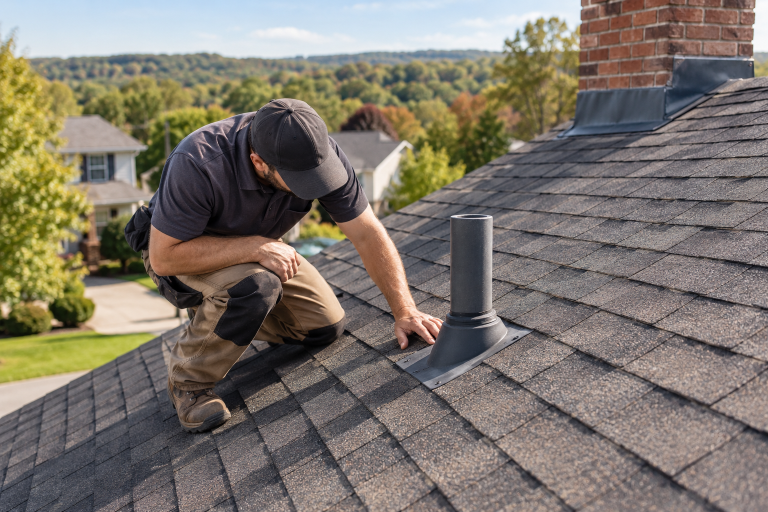
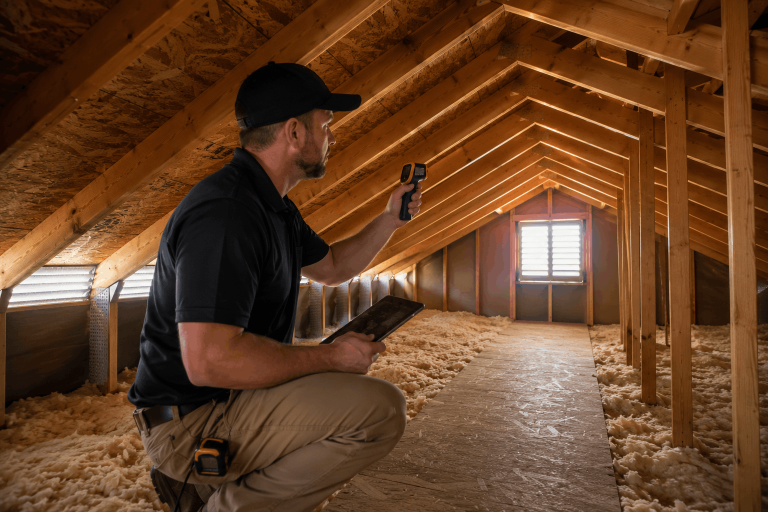
Roofing works in layers as well. Shingles or another roof covering sit above components such as underlayment, decking, flashing, and framing. Gotcha Covered Contracting’s existing guide to a professional roof inspection in Pennsylvania explains how inspections can include areas such as roof surfaces, gutters, and attic conditions, including signs of water or deterioration that may not be apparent from outside.
An inspection can therefore tell you what is observable at that moment. Removal sometimes provides information that simply was not available earlier.
What Can Be Found Behind Damaged Exterior Materials?
Several different conditions may become apparent once damaged material is removed. Which ones matter depends entirely on the home, the location of the repair, the age and construction of the property, the cause of the damage, and how the area was originally built.
Deteriorated or Damaged Wood
One possibility is deteriorated wood behind a gutter, siding panel, roof edge, or another exterior component.
Wood deterioration may develop when moisture has repeatedly reached an area and has not been able to dry appropriately. It can also result from an older condition that existed before the current damage occurred.
The United States Environmental Protection Agency notes in its moisture control guidance for buildings that moisture management is important in walls, roofs, ceilings, foundations, and other building assemblies. The agency explains that controlling water movement helps protect moisture-sensitive building materials.
Finding deteriorated material does not automatically tell you why it deteriorated. A professional evaluation is needed to understand what is happening and what should be addressed before new material is installed.
Damaged Sheathing or Attachment Surfaces
New exterior materials need an appropriate surface to attach to.
If the material behind a damaged component is weakened, broken, deteriorated, or otherwise unsuitable, simply covering it with a new finished product may not address the underlying condition.
This is especially relevant around roof edges, built-in gutters, siding assemblies, windows, doors, and other transitions where several parts of the exterior meet.
The International Residential Code is a model code used as the basis for many residential construction requirements. Its exterior wall provisions describe the importance of weather-resistant wall assemblies, water-resistive barriers, drainage, and flashing intended to limit water entry into wall cavities and framing. Local code requirements vary, so the requirements applicable to a specific property should be determined for that project. Review the International Residential Code exterior wall provisions.
Missing, Displaced, or Wet Insulation
Opening a wall or exterior assembly can sometimes expose insulation that is missing, displaced, compressed, wet, or otherwise different from what was expected.
Insulation is one part of a home’s overall building envelope. Air sealing is another.
The United States Department of Energy explains that insulation and air sealing work together as part of an effective building envelope. Gaps around walls, penetrations, windows, doors, and other transitions can allow unwanted air movement, and insulation by itself does not necessarily stop that movement. Read the Department of Energy’s guidance on air sealing and insulation.
A contractor should not assume that every opened wall needs additional insulation. The point is that if an existing condition becomes visible during legitimate repair work, it should be evaluated rather than ignored.
Flashing or Water-Management Problems
Flashing is often hidden once a project is complete, yet it plays an important role around roof-to-wall intersections, windows, doors, gutters, and other areas where water needs to be directed away from vulnerable parts of the structure.
A visible piece of damaged material may therefore be only one part of the concern.
If an area is opened and the existing flashing is missing, damaged, improperly integrated, or otherwise unable to perform as intended, the contractor may need to address that condition before closing the assembly.
This is also why replacing an exterior component is not always as simple as removing one damaged piece and attaching another one in the exact same place.
Why Installing New Material Over a Bad Surface Can Create Problems
Homeowners understandably want a repair completed efficiently. Efficiency is important, but speed should not come at the expense of addressing a condition that prevents the new material from being installed properly.
Suppose a gutter has pulled away from a section of fascia. Replacing the gutter may seem like the complete repair. Once it is removed, however, the attachment area may show deterioration or damage that was previously concealed.
Attaching the new gutter to a compromised surface would not correct the underlying issue.
The same idea applies to siding. Installing a new siding panel over a damaged substrate or unresolved moisture-management problem could leave the underlying weakness in place.
It applies to roofing as well. A roof covering depends on what is beneath it. Homeowners dealing with roofing concerns can learn more about Gotcha Covered Contracting’s residential roofing services and repair considerations, including the importance of evaluating the existing condition before deciding what the property needs.
Good workmanship is not just about how the finished surface looks. It also involves the preparation and details that allow the materials to perform the way they are intended to perform.
Why Gutter Damage Deserves a Closer Look
Gutters are a particularly useful example because homeowners can usually see them from the ground.
You might notice a gutter sagging, metal bent around the roof edge, a downspout pulled loose, or a section separating from the home. Those are visible symptoms.
The condition of the attachment point is less obvious.
The issue could be limited to the gutter itself. It could also involve the fascia, roof edge, fasteners, flashing, or another component behind it. That cannot always be determined until the affected area is accessible.
Gotcha Covered Contracting provides seamless gutter installation and replacement in the Pittsburgh area and explains that gutter performance is connected to how water is directed away from the roof, siding, and other parts of the home.
A professional inspection can help determine whether the visible gutter problem appears isolated or whether other areas deserve closer evaluation.
What About Hidden Conditions Behind Siding?
Siding is designed to be part of an exterior wall system, not the only layer protecting the home.
Behind the visible siding, a wall may include sheathing, a water-resistive layer, insulation, framing, flashing around openings, and other materials depending on how the home was constructed.
Damage from wind, impact, water, age, or previous work can sometimes affect more than the visible panel.
The Environmental Protection Agency notes that moisture problems can occur in places that are difficult to see, including behind wall finishes and inside wall cavities. Read the Environmental Protection Agency’s information about hidden moisture conditions.
That does not mean damaged siding automatically indicates hidden moisture or structural damage. It means contractors should evaluate what is actually present rather than making assumptions in either direction.
Gotcha Covered Contracting also works with exterior siding systems, including siding installation options for Pittsburgh-area homes. When siding is being repaired or replaced, the condition of the underlying assembly can be an important part of determining the proper next step.
Can Hidden Damage Change the Cost of a Repair?
It can.
An estimate is generally based on what can reasonably be observed and the scope of work identified before construction begins. If removal exposes an additional condition that genuinely needs to be corrected before the original repair can be completed properly, additional materials or labor may be required.
That does not mean every project should automatically become more expensive once work starts. Homeowners should be able to understand what was discovered, why it matters, and how it affects the work.
A clear contractor should be willing to show the condition, explain its relationship to the repair, and discuss the next step before proceeding with additional work when circumstances allow.
Photos can be particularly useful. They provide a straightforward way to document what was found after the exterior material was removed.
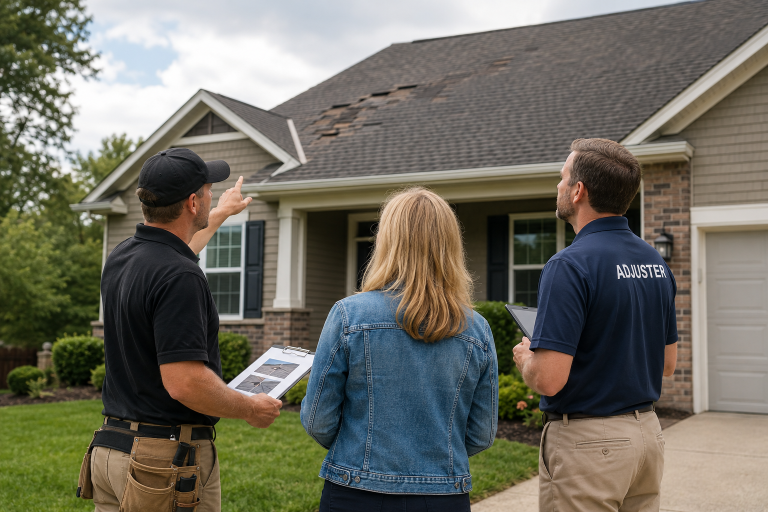
When insurance is involved, homeowners should also remember that the contractor identifies and documents property conditions, while the insurance carrier makes decisions about coverage. Discovering additional damage during a repair does not guarantee that the additional work will be covered.
Is Unexpected Damage Always Storm Damage?
No.
Finding deterioration or another concealed condition during a storm-related repair does not automatically establish that the storm caused it.
Some problems may be recent. Others may have developed gradually. A condition could relate to age, previous installation, long-term moisture exposure, maintenance, earlier repairs, or another cause.
This distinction matters.
Gotcha Covered Contracting’s storm, wind, and hail damage information discusses exterior damage that can occur during severe weather. A professional inspection and appropriate documentation can help identify observable conditions, but conclusions should be based on the evidence available rather than assumptions.
Your insurance carrier ultimately determines whether damage falls within the terms of your policy.
What Should a Homeowner Expect If Additional Damage Is Found?
Finding something unexpected does not need to turn into a confusing conversation.
A reasonable process should focus on clarity.
First, the contractor should identify the condition. Photos or video may help the homeowner see an area that would otherwise be difficult to access.
Next, the contractor should explain why the condition matters. The important question is not simply, “Did we find something else?” It is, “Does this affect our ability to complete the repair properly?”
The homeowner should also understand what needs to happen next. Sometimes the finding may require a repair before work can continue. In other situations, the condition may be unrelated to the immediate scope and can be addressed separately.
The contractor should avoid making unsupported promises about insurance coverage, warranties, pricing, or outcomes. The goal should be to give the homeowner enough information to make an informed decision.
Why Western Pennsylvania Homes Can Present Complicated Repair Conditions
Homes throughout Western Pennsylvania vary widely in age, architecture, exterior materials, previous renovations, and construction methods.
A contractor working around Robinson Township may encounter a newer home built with relatively modern materials on one project and an older home with several generations of repairs on the next.
Weather adds another variable. The region experiences rain, snow, ice, wind, hail, humidity, and repeated temperature changes throughout the year. Those conditions can expose weak areas in roofing, siding, gutters, flashing, windows, doors, and other exterior components over time.
That does not mean every Western Pennsylvania home has hidden damage. It does mean exterior repairs should be approached with enough flexibility to respond to the actual condition of the property.
Gotcha Covered Contracting’s primary focus is helping residential homeowners throughout roughly a 60-mile radius of Robinson Township, with select reach into Ohio and West Virginia, understand what their property actually needs without turning every concern into a larger project than necessary.
How Can Homeowners Reduce Surprises During Exterior Repairs?
No inspection can guarantee that every concealed condition will be discovered before materials are removed. Homeowners can still ask questions that make the process clearer.
Ask what the contractor can see now and what remains hidden.
Ask whether there are areas where additional deterioration could reasonably be discovered during removal.
Ask how unexpected conditions will be documented.
Ask whether additional work will be discussed before it is completed.
Ask what parts of the existing assembly need to be in suitable condition for the new material to be installed correctly.
Those conversations help create realistic expectations without assuming that additional problems will be found.
Frequently Asked Questions
Can a contractor know exactly what is behind siding or gutters before removing them?
Not always. An inspection can identify visible warning signs and sometimes reveal clues about underlying conditions, but closed building assemblies can hide materials that cannot be fully evaluated until the damaged component is removed.
Does hidden damage mean the original inspection was incomplete?
Not necessarily. Some conditions are genuinely concealed during a non-destructive inspection. A contractor should explain what could be observed before work began and what only became visible after removal.
What happens if rotted wood is found during a repair?
The contractor should evaluate the affected area and explain whether the deteriorated material needs to be repaired or replaced before the new exterior material is installed. The appropriate solution depends on the location, severity, and construction of the home.
Can damaged gutters cause problems behind the gutter itself?
They can. The condition may be limited to the gutter, or there may be damage to an attachment surface, fascia, flashing, or another nearby component. An inspection can help determine what should be checked.
Does insurance automatically cover additional damage found during repairs?
No. Coverage depends on the policy, cause of loss, documentation, and the insurance carrier’s determination. A contractor can document visible conditions, but the carrier makes coverage decisions.
Should new siding be installed if the material behind it is damaged?
A contractor should evaluate the underlying condition first. Exterior materials generally depend on suitable substrates, flashing, drainage details, and other components to function as intended.
Can missing insulation be found during exterior repairs?
It is possible. Opening a wall assembly can sometimes reveal missing, displaced, wet, or poorly fitted insulation. Whether corrective work is appropriate depends on the specific construction and repair scope.
How should unexpected repair work be documented?
Photos, written descriptions, measurements, and clear communication about what was discovered can help the homeowner understand why the repair scope may need to change.
Get Clear Answers Before Making a Repair Decision
The most important part of discovering an unexpected condition is understanding what it means.
Visible damage should be inspected carefully, and anything uncovered during legitimate repair work should be evaluated based on the actual condition of the home. Sometimes the original repair plan remains appropriate. Sometimes a hidden issue needs attention before new material can be installed properly.
If you are dealing with roofing, siding, gutter, storm, or exterior damage near Robinson Township or elsewhere in Gotcha Covered Contracting’s Western Pennsylvania service area, you can schedule a consultation with Gotcha Covered Contracting to get straightforward guidance about what your property may need.