A damaged siding panel can look like a simple repair. One piece is cracked, dented, or pulled loose, so the obvious solution seems to be removing that panel and installing a new one.
Sometimes it really is that straightforward. Other times, the hardest part of the repair is not removing the damaged siding. It is finding a replacement that actually matches what is already on the house.
Vinyl siding manufacturers produce many different profiles, textures, colors, and product lines. Two panels can look nearly identical from several feet away and still be different enough that they will not properly interlock. Older products may also have been discontinued. Even when the exact product and original color can still be purchased, years of exposure to sunlight and weather can make a new panel look noticeably different from the siding surrounding it.
That is why one of the most useful things a homeowner can do is keep good records of the exterior products installed on the home. Gotcha Covered Contracting helps homeowners throughout the Robinson Township area and surrounding Western Pennsylvania understand siding repair and replacement options without assuming that every damaged panel requires a complete exterior replacement.
Why Is Matching Existing Vinyl Siding So Difficult?
Vinyl siding is not one universal product.
Manufacturers offer different panel configurations, widths, exposures, textures, locking systems, thicknesses, and colors. The Vinyl Siding Institute installation manual explains that vinyl siding is available in a variety of architectural styles, colors, profiles, finishes, and textures. It also emphasizes following the specific product manufacturer’s installation instructions.
That variety gives homeowners plenty of choices when selecting new siding. It becomes more complicated when someone needs to replace a small section many years later.
A contractor may look at an existing wall and recognize that it is double four-inch siding, Dutch lap, traditional lap, or another common configuration. That observation can help narrow the search, but it does not necessarily identify the manufacturer or exact product.
Small differences matter because the new piece needs to connect correctly with the siding already installed above and below it. A panel that looks close but has a different locking configuration or exposure may not fit properly.
This is why identifying the product before ordering replacement material is so important.
The Best Homeowner Record to Keep Is the Original Product Information
Most homeowners save appliance manuals and paint colors, but siding paperwork often gets discarded after a project is finished.
That information can become extremely valuable later.
If you are having siding installed or replaced, consider keeping a record of:
- Manufacturer
- Product line
- Profile or style
- Color name
- Product or catalog number, if available
- Installation date
- Contractor invoice or proposal
- Warranty documents
- Photos of packaging labels when possible
- A small leftover piece of siding, if practical
A physical sample can be particularly useful because it gives a contractor or supplier something to compare against.
Keeping those records does not guarantee that the material will still be manufactured years later, but it removes a major part of the identification process. Instead of starting with, “What siding is this?” the contractor can begin by checking whether a known product is still available.
Homeowners considering an exterior project can learn more about Gotcha Covered Contracting’s siding installation and repair services.
What Happens When the Original Siding Has Been Discontinued?
Exterior building products change over time.
Manufacturers introduce new collections, revise profiles, update colors, merge product lines, and discontinue older materials. A siding product that was widely available when a house was built or remodeled may no longer be in regular production when a storm damages several panels years later.
This creates an important distinction between a siding panel being damaged and a siding panel being replaceable with an exact match.
The damaged area may be physically repairable. The question is whether compatible material still exists.
A contractor may investigate available materials through manufacturers, distributors, suppliers, remaining inventory, or identifiable product information. Sometimes the correct siding can still be located. Sometimes there may be a compatible option. Other times, the original product simply is not available anymore.
That does not automatically tell you what the next step should be. The amount and location of the damage, available materials, appearance expectations, installation considerations, and overall condition of the exterior all need to be evaluated.
A professional inspection can help determine what options actually make sense for the house.
Why the Same Siding Color May Still Look Different
Finding the correct manufacturer and product does not necessarily mean a replacement panel will disappear into the wall.
Color is another challenge.
Exterior siding spends years exposed to sunlight, temperature changes, moisture, and general weathering. ASTM International’s standard for color and appearance retention of plastic siding addresses methods used to evaluate how plastic siding retains its appearance during exterior exposure.
Modern siding products are designed with color performance in mind. ASTM also maintains performance requirements for rigid polyvinyl chloride siding, including requirements related to characteristics such as dimensions, appearance, weathering, expansion, and shrinkage.
That does not mean a product installed years ago and a brand-new panel will always appear visually identical.
Think about the difference between a new piece that has been stored indoors and one that has spent years facing afternoon sun. Even when both started with the same manufacturer’s color designation, their current appearance may not be exactly the same.
The location of the repair matters too. A small variation on a less visible side of the house may be acceptable to one homeowner, while a panel in the center of the front elevation may be much more noticeable.
That is why homeowners should discuss appearance expectations before the repair begins.
Can a Contractor Identify Siding Just by Looking at It?
Sometimes an experienced contractor can narrow down the possibilities quickly. That is different from guaranteeing the exact manufacturer and product from appearance alone.
Several products can share similar dimensions, textures, and profiles. Once siding has been installed for years, packaging and labels are usually long gone.
A good evaluation may involve examining the profile, measuring the exposure, looking at the locking system, checking accessible pieces, reviewing old project documents, and comparing the existing material with available products.
The homeowner’s original records can make this process much more efficient.
If you know that the siding is a particular manufacturer’s product line and color, that information gives the contractor a specific place to start. Without it, identification can require considerably more investigation.
Should You Replace One Piece or More of the Wall?
There is no universal answer.
If the exact product is available and the damaged area is limited, replacing an individual panel or small section may be reasonable. If the product cannot be matched, the discussion becomes more complicated.
A homeowner may need to consider questions such as:
- How visible will the repaired area be?
- Will the replacement panel physically integrate with the existing siding?
- How different will the color or texture appear?
- Is the damage limited to one location or present across multiple sections?
- What condition is the rest of the siding in?
- Would a broader repair produce a better practical and visual result?
Those questions should be answered based on the actual house rather than a predetermined sales recommendation.
Gotcha Covered Contracting provides residential siding installation and repair services and can help homeowners understand whether a localized repair appears practical or whether broader replacement options are worth discussing.
Storm Damage Can Make the Matching Problem More Important
Matching siding becomes especially relevant after wind or hail damage.
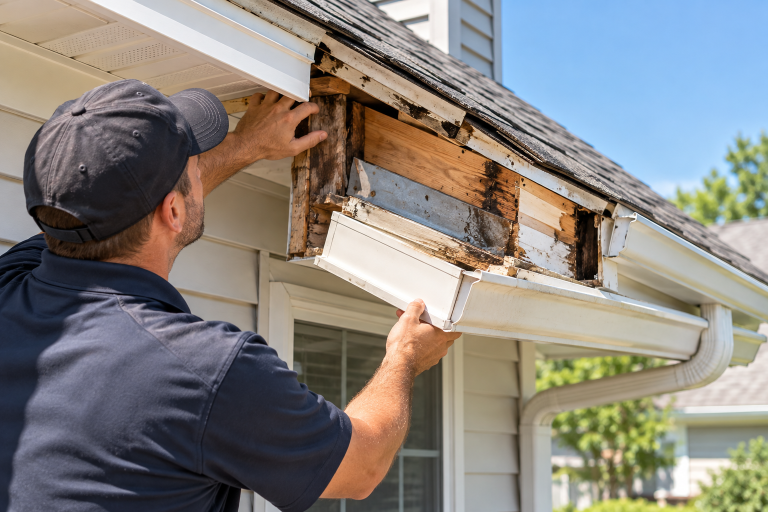
A storm may affect only a few panels, or damage may appear in several areas of an elevation. From the ground, a homeowner may see a crack, hole, loose panel, or impact mark and reasonably assume that replacing those specific pieces will restore the exterior.
The material investigation may reveal additional complications.
The original product could be discontinued. A compatible panel might not be available. The closest available color could differ noticeably. Damage may also extend farther than what can be seen during a quick walk around the property.
The first step should be understanding the condition of the siding and the available repair options.
Homeowners should avoid assuming either that a full replacement is necessary or that a one-panel repair will definitely solve the problem before the material and damage have been evaluated.
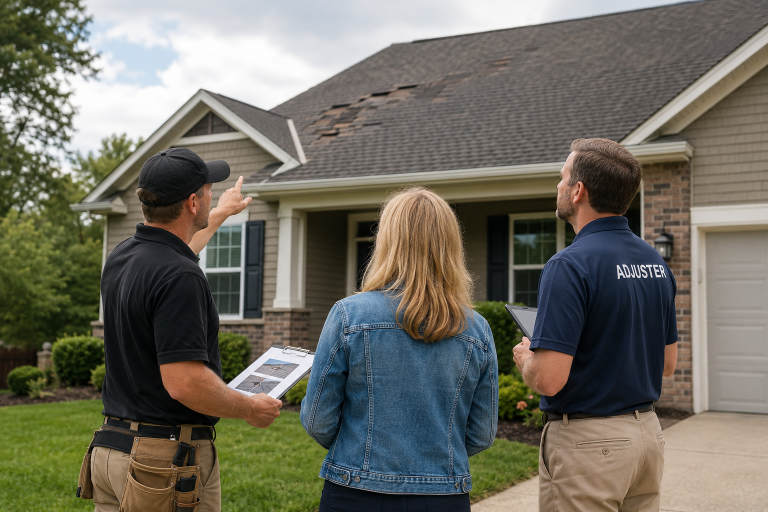
If insurance is involved, the insurance carrier makes coverage decisions. A contractor can document visible conditions, identify materials when possible, explain repair considerations, and provide information that may help support the process, but should not promise a particular claim outcome.
Why Western Pennsylvania Homes Can Present Their Own Matching Challenges
Homes throughout Western Pennsylvania experience changing seasons, sunlight, precipitation, wind, freezing temperatures, and temperature swings throughout the year. Exterior materials spend years exposed to those conditions.
For an older home near Robinson Township or another nearby community, the siding currently visible may have been installed many years ago. The longer the time between the original installation and a repair, the greater the possibility that product availability has changed.
Gotcha Covered Contracting serves homeowners throughout communities across its Western Pennsylvania service area.
For homeowners considering a larger siding project rather than a small repair, Gotcha Covered Contracting also provides information about insulated vinyl siding options.
Local experience is useful because the objective is not simply to find something that looks close in a catalog. The goal is to understand what is already installed on the house, whether compatible material is available, and what the finished repair is likely to look like.
Do Not Throw Away Your Exterior Project Information
One of the easiest lessons from siding repairs has nothing to do with tools or installation techniques.
Keep the paperwork.
The same habit is useful for roofing, windows, doors, paint, flooring, and other home improvement products. Product names and model information can save considerable uncertainty when something needs to be repaired years later.
For siding specifically, take a photograph of the box label before the installer leaves. Save your invoice electronically. Keep warranty documents in a home improvement folder. If leftover material is available and you have a reasonable place to store it, consider keeping a small amount.
You may never need it.
If one panel gets damaged years from now, however, that information can make the difference between immediately knowing what product to search for and beginning an identification process from scratch.
What Should You Do If Your Siding Is Already Damaged?
Start by looking at the area safely from the ground.
Take photographs of the affected siding and nearby undamaged sections. If the damage followed a storm, record the approximate date and what you observed. Do not pull panels away from the wall simply to look behind them unless you understand how the siding system is assembled.
Next, look through your home records. Search for previous estimates, invoices, warranties, builder documents, receipts, photographs, and product literature.
If you find the manufacturer’s name, product line, or color, share that information with the contractor performing the inspection.
If no records exist, that does not mean a repair cannot be evaluated. It simply means product identification may require more investigation.
The Vinyl Siding Institute installation guidance emphasizes manufacturer-specific installation instructions because product requirements can vary. That is another reason exact product identification is more useful than assuming visually similar siding is interchangeable.
Get Clear Expectations Before Approving the Repair
A homeowner should understand what the finished repair is expected to look like before work starts.
Useful questions include:
- Is the original manufacturer known?
- Is the exact profile still produced?
- Is the original color available?
- Will the new panel lock correctly into the existing siding?
- How noticeable is the color difference likely to be?
- Are there other damaged areas that should be evaluated?
- Is a localized repair still the most practical option?
A contractor should be able to explain what is known, what still needs to be verified, and where uncertainty remains.
Sometimes the result will be good news. The correct material may still be readily available.
Sometimes the best available repair will involve a visual compromise because the original siding has aged or the product is no longer manufactured.
The important part is knowing that before making the decision.
If your siding is damaged and you are unsure whether it can be matched, schedule a consultation with Gotcha Covered Contracting. An inspection can help determine what siding is present, what replacement options may be available, and whether a repair or broader replacement makes sense for your home.
Frequently Asked Questions
Can you replace just one piece of vinyl siding?
Sometimes. If the damage is isolated and a compatible replacement panel is available, replacing an individual piece may be possible. A professional inspection can help determine whether the replacement panel will properly connect with the existing siding and what the finished repair is likely to look like.
Why does new siding look different even if it is the same color?
Existing siding has spent years exposed to sunlight and weather. A brand-new panel has not experienced the same exposure, so there can be a visible difference even when the replacement carries the same manufacturer’s color name.
How can I find out what brand of siding is on my house?
Start with old invoices, builder records, warranty documents, product literature, photographs, and leftover siding. A contractor may also examine the profile, dimensions, locking system, texture, and other characteristics to help narrow down the manufacturer or product.
What happens if my vinyl siding has been discontinued?
A contractor can investigate whether remaining inventory, compatible material, or another practical repair option is available. If an exact match cannot be found, the homeowner may need to compare the appearance and practicality of a localized repair with broader replacement options.
Will similar-looking vinyl siding panels fit together?
Not necessarily. Panels from different manufacturers or product lines may look very similar while using different dimensions or locking configurations. Compatibility should be verified before replacement material is installed.
Should I save leftover siding after a new installation?
If practical, yes. A small quantity of leftover material can be helpful if a panel is damaged later. You should also save the manufacturer, product line, profile, color, invoice, installation date, and warranty information.
Does faded siding mean something is wrong with it?
A visual color difference alone does not establish that siding has failed. Exterior materials are exposed to weather and sunlight over time, and appearance can change. A professional evaluation can help distinguish a cosmetic matching issue from physical damage or another siding problem.
Should I replace all of my siding if one panel cannot be matched?
Not automatically. The right decision depends on the location and amount of damage, compatibility of available materials, condition of the existing siding, appearance expectations, and other property-specific factors. An inspection can help clarify the practical options.