Replacing the siding on your home is an opportunity to do more than update the color or replace aging materials. It is also a chance to rethink how the different sections of your exterior work together.
Many homeowners focus on choosing between vinyl siding, fiber cement, and other traditional materials. Those are important decisions, but the smaller design details can have just as much influence on the finished appearance.
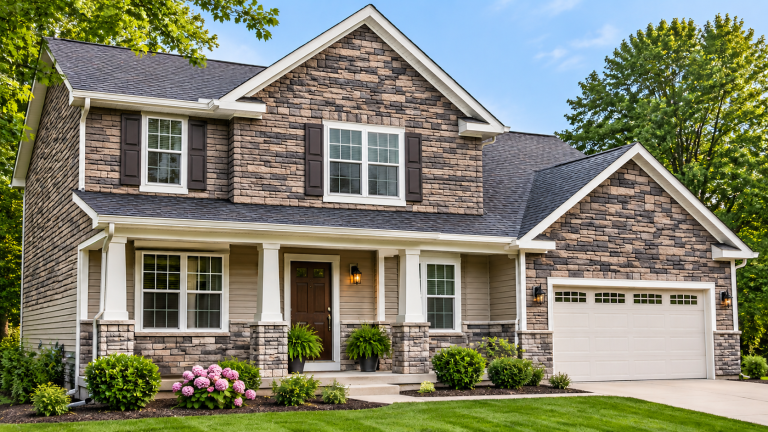
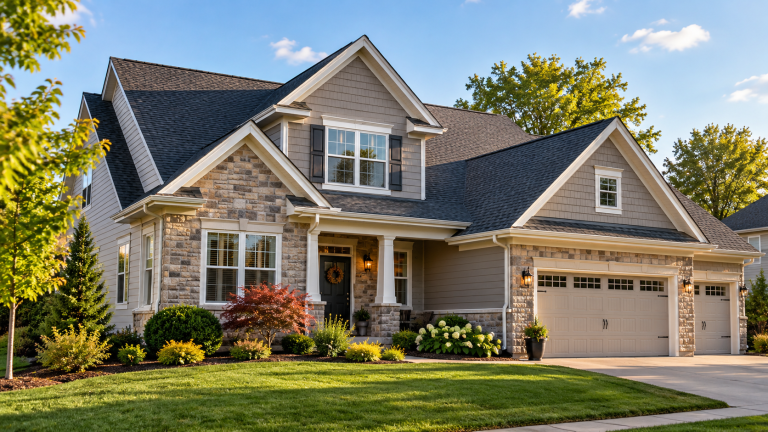
One option worth considering is TandoStone, a manufactured stone-look siding product that can be used to create accents around entryways, gable ends, and lower exterior walls.
For homeowners throughout Robinson Township, Pittsburgh, and Western Pennsylvania, combining traditional siding with stone-look accents can create a more distinctive exterior without requiring natural stone across large sections of the home.
At Gotcha Covered Contracting, we work with homeowners on siding projects that involve different materials, textures, and architectural details. One of the things we encourage people to consider is how accent materials might improve the overall design before they finalize their siding selections.
The goal is not to add something simply because it looks different. It is to choose materials that complement the home, fit the project, and create a balanced appearance.
What Is TandoStone Siding?
TandoStone is an engineered composite siding product designed to reproduce the appearance and texture of natural stone.
Unlike traditional stone masonry, which generally requires a different installation process, TandoStone is manufactured in panels that can be installed using techniques and tools familiar to siding professionals.
According to the manufacturer’s TandoStone product information, the panels are designed to provide the appearance of stone without requiring mortar or masonry adhesives. They are also considerably lighter than traditional stone materials.
This makes TandoStone an interesting option for homeowners who want a stone-inspired exterior but are planning a project primarily involving siding.
There are two main stone-style profiles worth understanding.
Stacked Stone features a more linear appearance with relatively narrow joints between individual stone shapes. It can work well with contemporary or transitional home designs where clean horizontal lines are a priority.
Creek Ledgestone has a more irregular stone appearance, with varied shapes and pronounced joints that create additional visual texture. This style may be a good match for homes where a more traditional or rustic stone appearance is desired.
Both styles are intended to reproduce natural stone visually, but they are composite cladding products rather than natural stone.
That distinction matters. Homeowners should understand exactly what material they are purchasing, how it is installed, what maintenance it requires, and how it will work with the rest of their exterior.
Where Can Stone-Look Siding Accents Be Used on a Home?
One of the advantages of manufactured stone-look siding is that homeowners can use it selectively.
You do not necessarily need to cover an entire wall or house to make an architectural difference. In many situations, an accent is most effective when it draws attention to a particular feature.
Gable Ends
Gable ends are the triangular wall sections beneath certain rooflines.
On many homes, these areas are finished with the same siding used on the rest of the exterior. That creates consistency, but it can also leave an opportunity for a contrasting material.
Adding stone-look accents to a gable can draw attention to the roofline and introduce texture to an otherwise uniform elevation.
The important consideration is proportion.
A large gable may provide enough space for a distinct stone-look pattern. A smaller gable might look better with a simpler finish, particularly if the house already has several contrasting materials.
The best design depends on the roof shape, window placement, existing trim, and overall architectural style.
Lower Exterior Walls
Another option is to install a stone-look accent along the lower portion of a wall.
For example, a homeowner might choose a band approximately three feet high, with traditional siding continuing above it.
This creates a visual separation between the base of the home and the upper wall. It can also give the exterior a more substantial appearance.
A lower-wall accent can be particularly attractive on homes with long, uninterrupted siding elevations.
However, it is important to consider how the accent will terminate around garage doors, porches, steps, and corners.
The height should not be chosen in isolation. The design should account for windowsills, entryways, foundation exposure, and existing architectural lines.
Front Entryways
The front entrance is often one of the first things people notice about a home.
Stone-look siding around an entryway can create a focal point, especially when paired with complementary trim, siding colors, and an appropriately sized front door.
The accent does not necessarily need to cover the entire entrance wall.
Sometimes a smaller, carefully selected section provides enough contrast to make the entryway stand out.
Homeowners should also consider how exterior lighting, house numbers, porch columns, and other fixtures will be incorporated into the finished surface.
Garage Fronts and Architectural Features
Garage walls and projecting sections of a house are other potential locations for stone-look accents.
A home with a prominent front-facing garage may benefit from a contrasting material around portions of that elevation.
Similarly, an exterior bump-out or architectural feature can sometimes be emphasized with a different texture.
The key is consistency. Using several unrelated accent materials in different locations can make a house look busy rather than coordinated.
How Do You Combine TandoStone With Vinyl or Fiber Cement Siding?
A mixed-material exterior works best when the different finishes look intentional.
That usually starts with selecting the primary siding material before finalizing the accent.
Vinyl and fiber cement are two common options for residential siding projects in Western Pennsylvania. Gotcha Covered Contracting offers residential siding installation and replacement services that include these material categories.
Each material has its own appearance, installation requirements, available profiles, and maintenance considerations.
When combining siding with a manufactured stone-look accent, there are several design details worth discussing.
Color coordination: Stone-look products frequently include several tones within one panel. Selecting siding that complements one of those tones can help create a coordinated exterior.
Texture contrast: Smooth or lightly textured siding can provide a simple background for a more dimensional stone-look accent.
Architectural proportions: Accent areas should support the existing design rather than compete with windows, rooflines, and doors.
Trim and transitions: The points where one material meets another need to look finished while also accommodating the installation requirements of each system.
For homeowners considering fiber cement, it may also be useful to review the company’s James Hardie fiber cement siding information before comparing different siding and accent combinations.
A good exterior design does not require every material to match perfectly. It does require the colors, textures, and proportions to work together.
Is TandoStone Easier to Install Than Traditional Stone?
TandoStone is designed for a different installation process than natural stone or many conventional masonry veneers.
The manufacturer explains that its composite stone panels can be cut with common saw blades and installed using traditional siding tools, without mortar or adhesives.
That can simplify certain aspects of construction, particularly when the rest of the project already involves replacing siding.
However, easier installation does not mean installation details can be ignored.
Panels still need the correct supporting surface, fasteners, accessories, clearances, and transitions. The contractor also needs to follow the requirements for the specific product profile being installed.
Homeowners and contractors can review the manufacturer’s TandoStone installation guides for product-specific requirements.
It is also important to understand that siding is not the same thing as a complete water-management system.
The United States Department of Energy’s guidance on water-managed exterior walls explains why exterior wall assemblies need appropriate drainage and moisture protection behind the visible cladding.
For a siding project, this means the appearance of the finished panels is only part of the job.
The condition of the wall beneath the existing siding, the water-resistive barrier, flashing around openings, and transitions between materials all deserve attention.
An attractive accent will not correct an underlying wall problem if that problem is left unaddressed.
What Should Homeowners Consider Before Adding Stone-Look Accents?
It can be tempting to choose an accent material based entirely on a photograph or sample.
Those examples are useful for inspiration, but the finished result will depend on how the material looks on your particular house.
Before making a final selection, consider the following factors.
The existing architecture
A traditional colonial-style home may benefit from a different accent layout than a craftsman-style house or a modern two-story home.
A material that looks attractive on one property may not create the same effect on another.
The amount of accent coverage
More stone-look siding does not automatically mean a better design.
Sometimes one carefully selected accent area creates stronger visual interest than several competing sections.
Your home’s current condition
If the project involves replacing older siding, it is worth evaluating whether the walls show signs of previous water intrusion, deteriorated materials, or other problems.
These conditions should be understood before decorative improvements are installed.
The overall project budget
Adding another material can affect the project cost.
Material quantities, corners, accessory pieces, wall preparation, and installation details can all influence the estimate.
A contractor should explain the additional scope rather than treating the accent as a simple decorative upgrade.
Long-term appearance and maintenance
Ask about cleaning requirements, manufacturer warranties, finish care, and replacement options if a section becomes damaged.
It is also worth viewing physical product samples outdoors.
Colors and textures can appear different in direct sunlight, shade, and the lighting conditions around your home.
Why Should Siding Accents Be Discussed Before Installation Begins?
One of the better times to discuss accent materials is while you are gathering siding estimates.
Homeowners sometimes finalize a siding color and material before realizing that a different texture might improve the overall appearance.
At that point, changing the plan may require revised material quantities, updated pricing, or a different installation layout.
Discussing accents early allows the contractor to evaluate how those materials will fit into the project.
For example, if you are considering a three-foot-high stone-look section along the bottom of your house, the estimate should account for the actual dimensions, outside corners, openings, transitions, and required accessories.
If the accent is going into a gable end, the contractor should consider the roofline, wall geometry, access requirements, and the way the panels will finish against surrounding trim.
This level of planning helps ensure that the material selection is practical, not just attractive in a photograph.
It is also helpful to ask for a clear written explanation of what is included.
Two siding proposals may appear similar while covering different work. One may include accent materials, specialty corners, or additional preparation that another does not.
The goal is to understand the full scope before making a decision.
Are Stone-Look Siding Accents a Good Fit for Western Pennsylvania Homes?
Western Pennsylvania has a wide variety of residential architecture.
Around Robinson Township, Pittsburgh, Moon Township, Sewickley, and surrounding communities, homeowners may be working with older traditional houses, suburban developments, split-level homes, or more contemporary designs.
There is no single siding combination that works best for every property.
The region’s weather is another consideration.
Homes experience seasonal rain, snow, freezing temperatures, humidity, and temperature changes. Exterior material selection should account for the manufacturer’s instructions and the overall wall assembly, not simply appearance.
This is particularly relevant where different materials meet.
Transitions around window openings, lower walls, roof intersections, and other architectural features must be detailed appropriately.
The Department of Energy’s guidance on drainage planes behind exterior cladding emphasizes the importance of coordinating water-resistive barriers with flashing and exterior wall openings.
For homeowners replacing siding in Western Pennsylvania, it makes sense to look at the complete exterior system before deciding where accents belong.
Gotcha Covered Contracting serves residential homeowners primarily within roughly a 60-mile radius of Robinson Township, with select reach into Ohio and West Virginia.
That local focus includes helping homeowners consider the appearance of their exterior alongside the practical details that matter in this climate.
How Much Do TandoStone Siding Accents Cost?
The cost of a TandoStone accent project depends on the amount of material, installation location, existing wall conditions, and the complexity of the design.
A small accent around an entryway will have different material and labor requirements than a larger application extending across the front of a home.
Corners, trim pieces, transitions, preparation, and access can also affect the final estimate.
For homeowners already replacing their siding, discussing accents as part of the larger project allows the contractor to consider the full scope rather than pricing an entirely separate installation.
The most useful comparison is often not just the price of individual siding products. It is the complete installed price for the design you want.
If the overall project budget is a concern, Gotcha Covered Contracting also provides information about financing options for siding and exterior remodeling. Financing terms and eligibility should be reviewed separately from the construction estimate.
Frequently Asked Questions
Is TandoStone real stone?
No. TandoStone is a manufactured composite cladding product designed to reproduce the appearance and texture of natural stone. It is not quarried stone or traditional masonry veneer.
Can TandoStone be installed with vinyl siding?
Yes, TandoStone can be incorporated into a mixed-material exterior design with vinyl siding. The installation needs to account for the manufacturer’s requirements, compatible accessories, and proper transitions between materials.
Can TandoStone be used on gable ends?
TandoStone can be considered for gable-end accent applications where the wall construction, installation conditions, and product requirements are suitable. A contractor should evaluate the specific location before recommending a layout.
Can I use TandoStone along the bottom three feet of my house?
A lower-wall accent is one possible application. The appropriate height and placement depend on the home’s architecture, wall conditions, openings, and installation requirements. Three feet is a design example rather than a universal recommendation.
Does TandoStone need mortar?
According to the manufacturer, TandoStone composite panels are designed to install without mortar or masonry adhesives. They still require proper fastening, accessories, and wall preparation.
Can I add stone-look accents without replacing all my siding?
It may be possible to add accents to a portion of an existing exterior. A professional evaluation can help determine whether the existing siding, underlying wall assembly, and proposed transitions make that practical.
Will TandoStone accents increase my home’s value?
A coordinated exterior renovation may improve curb appeal, but a specific increase in property value cannot be guaranteed. The finished design, quality of installation, condition of the home, neighborhood, and buyer preferences can all influence resale value.
Explore Siding Accent Options With Gotcha Covered Contracting
A siding project should leave you with more than a new exterior color. It should give you an opportunity to consider how materials, textures, and architectural details can work together.
TandoStone is one option for homeowners who want the appearance of natural stone without using traditional masonry across an entire wall.
Whether you are considering a gable accent, a lower-wall feature, or a more detailed exterior renovation, the right choice depends on your home’s design, condition, and project goals.
Gotcha Covered Contracting helps homeowners explore siding options with straightforward explanations and a practical approach to exterior improvements.
If you are planning a siding replacement or want to explore stone-look accent materials, schedule a consultation with Gotcha Covered Contracting to discuss what may work best for your home.