After a strong windstorm or severe weather event, most homeowners want to know whether their roof was damaged. It is natural to look outside, notice shingles in the yard, see branches near the house, or hear something moving above the ceiling and wonder what happened.
Climbing onto the roof may seem like the fastest way to get answers, but it can also create a serious safety risk. Storm-damaged roofs may be wet, unstable, covered with debris, or affected in ways that are not visible from the ground. Even homeowners who are comfortable using a ladder can find that getting back onto the ladder from the roof is much harder than expected.
The safer approach is to inspect what you can from the ground, document anything that looks unusual, and schedule a professional roof inspection when a closer look is needed.
Why Roof Inspections Are More Dangerous After a Storm
A roof can change quickly during a storm. High winds may lift shingles, loosen flashing, damage gutters, or move debris across the roof. Falling branches can also scrape roofing materials, puncture shingles, or affect the structure underneath.
Some hazards are obvious, but many are not. A roof may look normal from the yard while still having loose shingles, damaged decking, or slick areas that make walking dangerous. Wet shingles and loose granules can reduce traction, and strong wind gusts may continue after the main storm has passed.
The ladder itself can also become unstable if the ground is wet, soft, or uneven. Gutters and roof edges may have been loosened during the storm, making them unsafe to lean against or use for support.
Gotcha Covered Contracting provides professional roof inspections in the Pittsburgh area for homeowners who want clear information without taking unnecessary risks.
The Hardest Part May Be Getting Back Onto the Ladder
Many people focus on getting up the ladder, but the more difficult part is often returning to it from the roof.
When you step from a ladder onto a roof, you can usually see where you are going. Getting back onto the ladder requires you to turn, find a rung below you, and shift your weight near the edge of the roof. That becomes much more difficult when the roof is steep, wet, covered with debris, or damaged.
The Occupational Safety and Health Administration recommends maintaining three points of contact while using a ladder. That means keeping two hands and one foot, or two feet and one hand, in contact with the ladder while climbing.
Three points of contact can help reduce risk during ordinary ladder use, but it does not make walking on a storm-damaged roof safe. It also does not eliminate the difficulty of moving between the roof and the ladder.
If you feel uncomfortable stepping from the ladder onto the roof, it is a strong sign that you should not continue.
What You Can Check Safely From the Ground
You can gather useful information without climbing onto the roof. Wait until the storm has completely passed and conditions around the property are safe. Do not walk near the house while lightning, high winds, falling branches, flooding, or downed power lines remain a concern.
Once it is safe, walk around the property and look at the roof from several angles. Stay away from damaged trees, loose gutters, hanging materials, and anything that could fall.
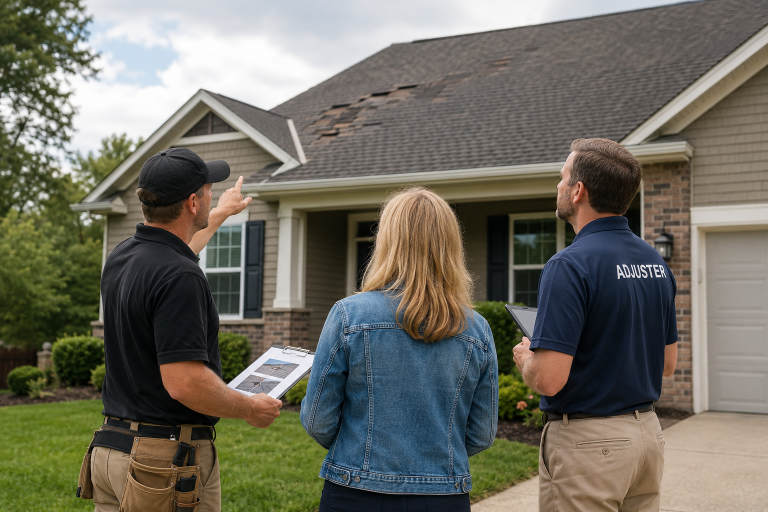
Look for shingles that appear missing, lifted, uneven, or darker than the surrounding area. Pieces of roofing material in the yard may also be worth noting, although they could have come from another property.
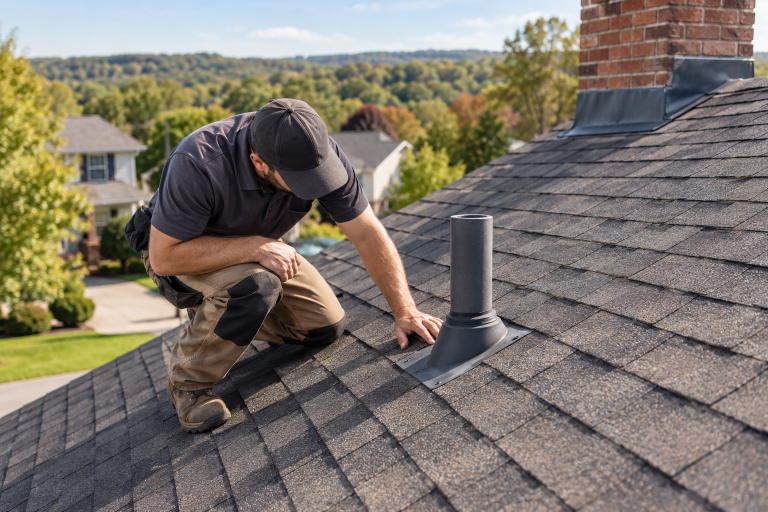
Pay attention to flashing around chimneys, walls, and roof transitions. The Federal Emergency Management Agency recommends checking for roof flashing that may have been affected by high winds. Bent, loose, or displaced flashing can create areas where water may enter.
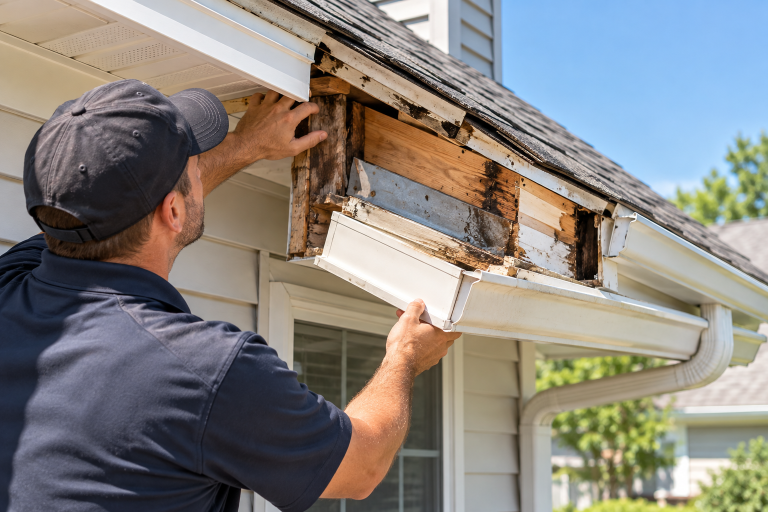
Gutters, downspouts, soffit, and fascia should also be checked from the ground. A gutter that is sagging, pulling away from the home, or no longer connected to a downspout may have been affected by the storm.
Branches on or near the roof also deserve attention. Do not try to remove a large branch yourself. Its weight may be resting on damaged materials, and moving it could make the situation worse.
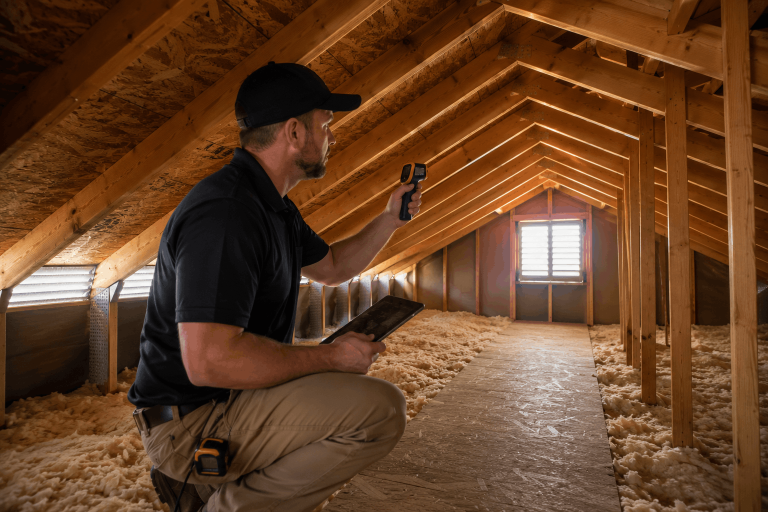
The inside of the home can provide important clues as well. Check ceilings, upper walls, attic areas, and spaces around vents or chimneys for new stains, damp drywall, dripping water, or unusual odors.
Water can travel along framing, decking, insulation, and other materials before it becomes visible. A stain on the ceiling does not always show the exact location where water entered the roof.
If water is near an electrical fixture, outlet, or wiring, keep people away from the area and contact the appropriate qualified professional.
Use Binoculars or a Camera for a Better View
Binoculars can help you see shingles, flashing, chimneys, roof edges, and other details without leaving the ground. A camera or smartphone with zoom may also help you document visible concerns.
Avoid leaning from an upstairs window or climbing onto a porch roof for a better angle. The goal is to improve visibility without creating another fall risk.
Take wide photographs that show the affected side of the home, followed by closer images of anything that looks damaged. It is also helpful to record the date of the storm and note what you observed.
The Federal Emergency Management Agency recommends taking photographs when documenting damage after severe weather. Documentation does not determine whether an insurance claim will be covered, but it can help preserve a record of visible conditions. Your insurance carrier makes coverage decisions.
When to Avoid a Ladder Completely
There are situations when setting up a ladder is not worth the risk.
Do not use a ladder when the ground is wet, soft, uneven, or icy. Avoid ladder use when wind is still present, power lines are nearby, the ladder is damaged, or the gutter or roof edge appears loose.
You should also stay off the ladder if you would need to carry tools or materials while climbing, if no one else is nearby, or if you feel uncertain at any point.
Roof inspections after storms are not ordinary household tasks. The safest decision is often to remain on the ground and call someone with the proper training and equipment.
Signs That Should Be Professionally Inspected
Missing shingles, roofing materials in the yard, loose flashing, new ceiling stains, damaged gutters, fallen branches, and changes in the roofline are all reasons to consider a professional inspection.
These signs do not automatically mean the entire roof needs to be replaced. A professional inspection can help determine whether the problem is limited to one area, whether a roof repair may be appropriate, or whether more extensive work should be considered.
The recommendation should be based on the actual condition of the roof. A small area of damage may be repairable. Widespread wind damage, repeated leaking, aging materials, or structural concerns may require a different solution.
An honest inspection should explain what was found, where the concern is located, and what options make sense for the property.
What a Professional Roof Inspection Should Cover
A roof is more than the shingles you can see from the yard. Flashing, valleys, vents, chimneys, gutters, soffit, fascia, and the roof deck all work together to protect the home.
A professional inspection may include the roof covering, flashing, roof penetrations, valleys, ridge areas, gutters, downspouts, visible decking concerns, attic moisture, and areas where branches or debris may have struck the roof.
The contractor should be able to explain the findings in plain language and provide photographs when appropriate. The inspection should not begin with the assumption that every storm means a replacement.
Gotcha Covered Contracting’s residential roofing services include inspections, repairs, and replacement options based on what the home actually needs.
What to Do if Water Is Entering the Home
If water is coming into the home, move furniture, electronics, and personal belongings away from the affected area when it is safe to do so. Place a container under the drip and keep people and pets away from any ceiling that appears swollen or unstable.
Do not climb onto a wet roof to install a tarp unless you are properly trained and equipped. Temporary repairs can involve the same fall hazards as a roof inspection, along with the added difficulty of carrying and securing materials.
Contact a roofing professional to evaluate the source of the leak and discuss the safest next step. The visible stain inside the home may be several feet away from the point where water entered the roof.
Local Storm Damage in Western Pennsylvania
Homes in Robinson Township and throughout Western Pennsylvania deal with changing weather throughout the year. High winds, thunderstorms, hail, heavy rain, snow, ice, and temperature swings can all affect roofing systems.
Homes in the region also vary widely. Some have simple asphalt shingle roofs, while others have steep slopes, dormers, chimneys, additions, or multiple roof sections. The safest inspection approach depends on the property and the conditions after the storm.
Gotcha Covered Contracting primarily serves residential homeowners within roughly a 60-mile radius of Robinson Township, with select reach into Ohio and West Virginia.
The goal of a roof inspection is to give homeowners clear information. It should help you understand whether the roof appears sound, whether a repair may be needed, or whether a larger issue should be addressed.
Get Clear Answers Without Climbing Onto the Roof
Wanting to understand what happened after a storm is completely reasonable. Climbing onto a potentially damaged roof is not the only way to get that information.
Start with a safe inspection from the ground. Take photographs, check the interior for moisture, and stay off ladders when conditions are unstable or you feel uncomfortable.
When the roof needs a closer look, request an honest inspection before making a major decision. Homeowners near Robinson Township and throughout the surrounding Western Pennsylvania service area can schedule a consultation with Gotcha Covered Contracting for straightforward guidance about what the property may need.
Frequently Asked Questions
Is it safe to inspect my own roof after a storm?
Inspecting from the ground is the safer option. Storm-damaged roofs may have wet surfaces, loose shingles, weakened decking, debris, or damaged edges that are difficult to see before climbing.
What roof damage can I see from the ground?
You may be able to see missing shingles, uneven sections, damaged flashing, loose gutters, fallen branches, or changes in the roofline. Binoculars or a camera with zoom can help you get a better view.
Does one missing shingle mean I need a new roof?
Not necessarily. A missing shingle may be repairable if the damage is isolated and the surrounding roof remains in good condition. A professional inspection can help determine the right next step.
What should I photograph after a storm?
Take photos of visible roof damage, roofing debris, damaged gutters, fallen branches, exterior damage, and interior water stains. Wide images provide context, while closer images show detail.
Will my insurance cover wind damage?
Your insurance carrier makes coverage decisions based on the policy and the circumstances. A contractor cannot promise approval, but documentation and a professional inspection may help explain visible conditions.
When should I schedule a professional roof inspection?
Schedule an inspection when you notice missing materials, new leaks, loose flashing, damaged gutters, fallen branches, changes in the roofline, or anything you cannot evaluate safely from the ground.