A water stain on the ceiling can make any homeowner stop and worry. It might show up after a heavy rain, during a windy storm, or a few days after bad weather has already passed. The first thought is usually that the leak must be directly above the stain. That seems logical, but roof leaks do not always work that way.
Water can travel before it shows up inside your home. It may enter around one part of the roof system, move along roof decking, framing, insulation, or a wall cavity, and finally appear in a completely different place. That means the stain you see inside may only show where the water ended up, not where it started.
For homeowners near Robinson Township and throughout Western Pennsylvania, this is a common concern. Heavy rain, wind, snow, ice, hail, and changing temperatures can all expose weak points in a roof system. Sometimes the issue is a simple repair. Sometimes it takes a closer look to understand what is really going on.
At Gotcha Covered Contracting, we believe a roof leak should be handled with a thorough, clear, and honest inspection. The goal is not to guess or pressure a homeowner into a decision. The goal is to find the source, explain the issue in plain language, and help the homeowner understand the right next step.
Why the Leak May Not Be Directly Above the Stain
Most homeowners assume water travels straight down. In a house, water usually follows the easiest path it can find.
Once water gets underneath roofing materials, it can move sideways along wood decking, follow a rafter, drip down a pipe, run behind insulation, or travel through a wall cavity. By the time it appears on a ceiling or wall, it may be several feet away from the actual entry point.
That is why a ceiling stain can be misleading. A stain in a bedroom does not always mean the roof problem is directly above that room. A drip near a light fixture does not always mean the water entered right above the fixture. The visible damage is an important clue, but it is not the full answer.
This is where a careful roof leak inspection matters. Patching the area above the stain without confirming the source may only cover up the symptom. If the real entry point is a pipe boot, chimney flashing, wall flashing, roof valley, or vent, the leak can return during the next storm.
Common Places Roof Leaks Start
A roof is more than shingles. Shingles protect a large part of the roof surface, but many leaks begin around the details where materials meet, change direction, or create openings.
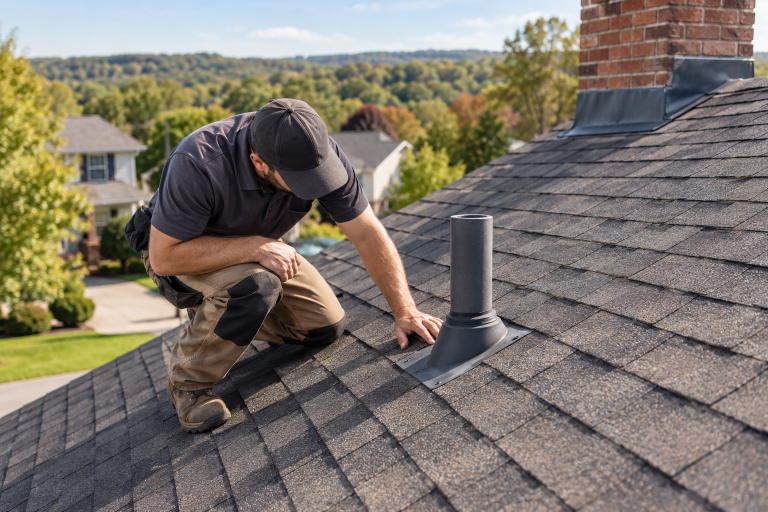
Pipe boots are one of the most common leak sources. These are the seals around plumbing vent pipes that come through the roof. Over time, the rubber or seal around the pipe can crack, split, or loosen. When that happens, water can enter around the pipe and travel before it shows up inside the home.
Chimney flashing is another area that needs close attention. A chimney interrupts the roof surface, so it must be flashed correctly to move water away from the connection point. If the flashing is loose, rusted, damaged, poorly installed, or covered with temporary patch material, water may get behind it and travel into the home.
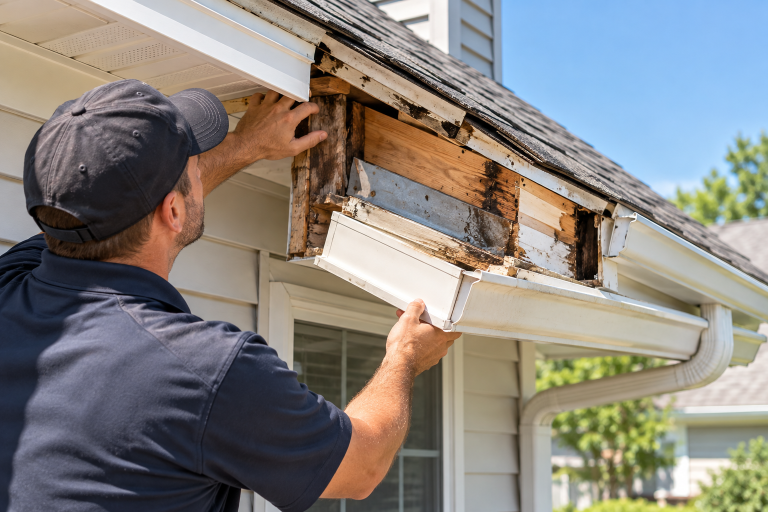
Wall flashing can also cause confusion. This is the flashing used where a roof meets a vertical wall, such as around dormers, additions, porches, or areas where the roof ties into siding. If that flashing is missing, damaged, or reused incorrectly during previous work, water can get behind the exterior materials and show up inside.
Roof valleys are another important area because they carry a large amount of water during rain and snow melt. If a valley is worn, clogged, damaged, or poorly installed, water may get underneath the roofing materials. The leak may not appear directly under the valley because water can continue moving before it finds a place to drip.
Vents, skylights, old mounts, and other roof penetrations should also be checked. Any place where something comes through the roof can become a leak point if it is not properly flashed, sealed, or maintained.
How Weather Can Make Roof Leaks Harder to Find
Some leaks only show up during certain weather conditions. A homeowner may notice that the roof stays dry during a light rain but leaks during a heavy storm. Another leak may only appear when the wind is blowing rain from one direction. Snow and ice can create a different set of problems when melting water cannot drain the way it should.
That does not mean the leak is not serious. It means the weak point may only show itself under the right conditions.
Western Pennsylvania weather can be tough on exterior systems. Homes near Robinson Township and across the surrounding service area deal with heavy rain, strong winds, hail, snow, ice, humidity, and freeze and thaw cycles. Over time, those conditions can wear down pipe boots, loosen flashing, lift shingles, stress valleys, and expose weak areas from older work.
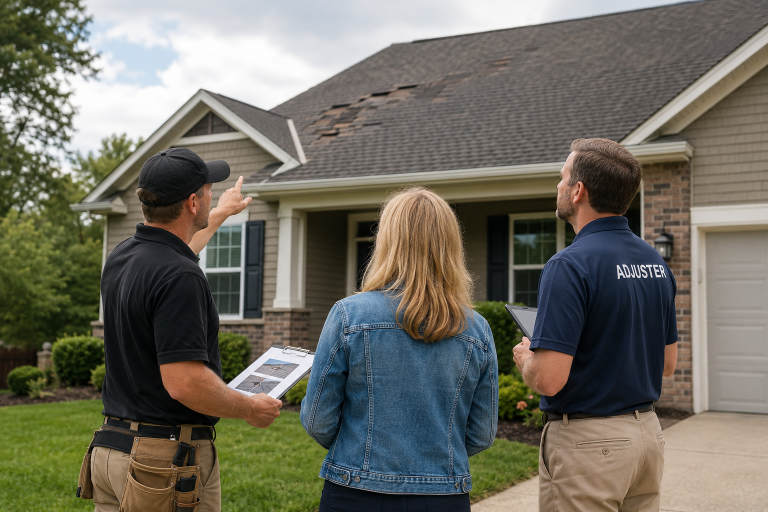
Storm damage can also play a role. Wind can lift, crease, loosen, or remove shingles. Hail can affect shingles, vents, gutters, and other roof components. A roof may not leak immediately after a storm, but damage can weaken the roof system and lead to problems later. If you notice new staining, missing shingles, loose siding, dents on gutters, or debris after a storm, it is often worth having the exterior checked.
What to Do When You Notice a Water Stain
The first step is to protect your home safely. Do not climb onto a wet, steep, icy, or storm damaged roof. Do not enter an attic if there is active water near electrical areas or any unsafe condition.
Inside the home, move furniture, electronics, rugs, and personal items away from the affected area if it is safe. If water is actively dripping, place a container underneath it. Take photos of the stain, the drip, and any visible damage. It can also help to write down when you first noticed the leak and what the weather was like at the time.
Those details give the inspection more context. A stain that appears during wind driven rain may point to a different concern than one that appears after snow and ice begin to melt.
Once the immediate area is protected, the next step is to schedule a roof leak inspection. The purpose of the inspection is to identify the possible source and determine whether the issue appears isolated or part of a larger concern.
Why an Honest Roof Leak Inspection Matters
A good inspection should give a homeowner clarity. It should not feel like a sales pitch.
During a roof leak inspection, the contractor should look at the roof surface and the details around it. That may include pipe boots, chimney flashing, wall flashing, valleys, shingles, vents, gutters, drainage areas, previous repair spots, and attic areas when accessible and safe. The interior stain matters too because it helps show where water is appearing and how it may be traveling.
The explanation after the inspection is just as important as the inspection itself. A homeowner should understand what was found, why it matters, and what options are available.
At Gotcha Covered Contracting, we do not believe every leak automatically means a full roof replacement. Some leaks can be repaired when the source is isolated and the rest of the roof is in good condition. At the same time, a small stain does not always mean the problem is small. A leak may point to a bigger concern if there are repeated leaks, widespread shingle wear, failing flashing, storm damage across several areas, or older repair work that is no longer holding.
The right recommendation should come from what the home is actually showing, not from a guess.
Can a Roof Leak Be a Simple Repair?
Yes, some roof leaks can be simple repairs. A cracked pipe boot, a small flashing issue, or a limited area of wind damage may be corrected without replacing the entire roof, depending on the condition of the surrounding materials.
That is why homeowners should not assume the worst as soon as they see a stain. A professional inspection can help determine whether the problem is isolated.
However, it is also important not to ignore the issue. Water can continue moving through the home and may affect insulation, drywall, framing, or other materials if the problem is left alone. A small leak can become more expensive if it is not addressed.
Can a Roof Leak Mean the Roof Needs Replaced?
Sometimes a leak is part of a bigger pattern. If the roof has repeated leaks in different areas, multiple failing flashing points, widespread shingle damage, storm damage across several slopes, or aging materials that no longer perform reliably, replacement may need to be discussed.
That does not mean a homeowner should be pressured into a major decision. It means the contractor should explain what was found and why a repair may or may not be the best long-term answer.
A roof works as a system. If one weak point is connected to larger wear, poor installation, or widespread storm damage, patching one area may not solve the real issue. Homeowners deserve a clear explanation before deciding whether repair or replacement makes sense.
Why Local Experience Matters
Roof leaks are often connected to local weather and local home conditions. In Western Pennsylvania, roofs deal with rain, wind, snow, ice, hail, humidity, and temperature swings throughout the year. Those conditions can wear down materials and expose installation details that were not handled correctly.
Gotcha Covered Contracting primarily serves homeowners within roughly a 60-mile radius of Robinson Township in Western Pennsylvania, with select reach into areas of Ohio and West Virginia. That local experience matters because the same types of leak concerns show up again and again in this region.
Homeowners in this area need practical guidance, not scare tactics. A local contractor should understand how weather affects roofs, siding, windows, doors, flashing, and exterior systems over time.
Questions Homeowners Can Ask During a Roof Leak Inspection
You do not need to know roofing terminology to ask good questions. A trustworthy contractor should be willing to explain the issue in a way that makes sense.
Here are a few helpful questions to ask:
- Where do you believe the water is entering?
- What signs point to that area?
- Does the problem appear isolated?
- Could this be repaired?
- Are there signs of storm damage?
- Are the pipe boots, chimney flashing, wall flashing, valleys, and vents in good condition?
- Can you show photos of what you found?
- What should be addressed first?
These questions help keep the conversation focused on facts. The goal is to understand the problem before making a decision.
Frequently Asked Questions
Why is my ceiling stained if the roof above it looks fine?
A ceiling stain does not always show the exact source of the leak. Water can enter through a pipe boot, chimney flashing, wall flashing, vent, valley, or another roof detail, then travel before appearing inside the home.
Does a water stain mean I need a new roof?
Not always. A water stain may come from a repairable issue. A professional roof leak inspection can help determine whether the problem is isolated or connected to a larger roofing concern.
What are common causes of roof leaks?
Common causes include cracked pipe boots, failing chimney flashing, damaged wall flashing, roof valley problems, lifted shingles, vent leaks, storm damage, clogged drainage areas, and poor previous repairs.
Should I climb on my roof to find the leak?
No. It is safer to inspect from the ground and schedule a professional inspection. Wet, steep, icy, or storm damaged roofs can be dangerous.
Can wind or hail damage cause a roof leak later?
Yes. Wind or hail damage may weaken roofing materials even if a leak does not show up right away. Over time, damaged areas can allow water to enter.
Will insurance cover my roof leak?
Your insurance carrier makes coverage decisions. Gotcha Covered Contracting cannot promise coverage or claim approval, but a professional inspection can help document visible damage and provide clear information.
How soon should I schedule an inspection after seeing a leak?
It is often best to schedule an inspection soon after noticing a stain, drip, or damp area. Small leaks can become more expensive if ignored, and early inspection can help clarify the next step.
Get a Clear Answer Before Making a Major Decision
A roof leak does not always mean the worst-case scenario. Sometimes the fix is simple. Sometimes the problem is more complex. The important thing is to avoid guessing.
Water can travel before it shows up inside your home. A ceiling stain may tell you where the water ended up, but it does not always show where the leak started. Pipe boots, chimney flashing, wall flashing, valleys, vents, storm damage, and previous repairs can all play a role.
Gotcha Covered Contracting helps homeowners near Robinson Township, throughout Western Pennsylvania, and within the surrounding 60-mile service area get clear answers through thorough, honest inspections.
If you are unsure where a leak is coming from or what your roof actually needs, schedule a consultation with Gotcha Covered Contracting and get straightforward guidance before making a major decision.